

Who Trigeneration Suits
In brief. It suits sites where gas is cheaper than grid energy and cooling is needed 3,000–4,000 hours a year or more. In model calculations, payback is 2.0 to 2.9 years for a data center, greenhouse, dairy plant, pharmaceuticals and a shopping mall, and 6.8 years for a business center with a short season.
Trigeneration (CCHP) suits a site where four conditions are met at once: gas is available, electricity is expensive or the grid cannot supply the required capacity, cooling is needed for 3,000–4,000 hours a year or more, and the cooling load exceeds 300 kW. If even one condition is not met, the scheme either pays back slowly or does not pay back at all. Below is a breakdown by sector, with figures from model calculations and with the cases where we advise calculating something else.
How do you tell whether trigeneration suits a site?
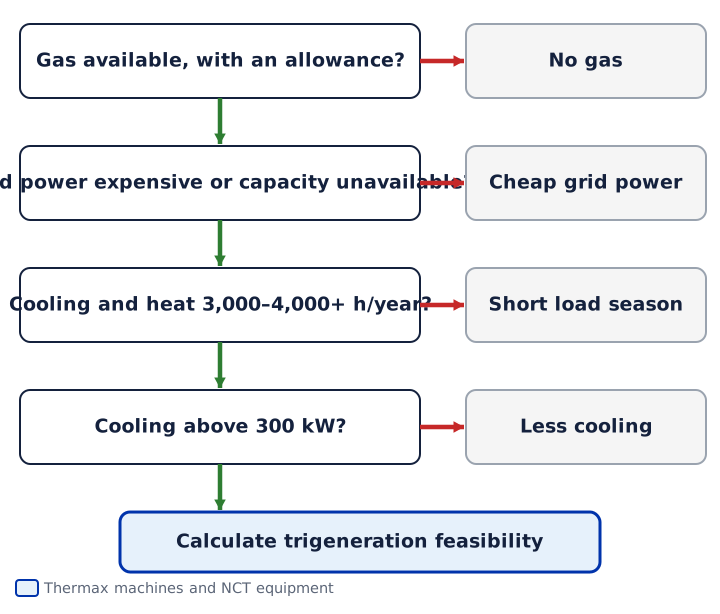
Four questions give the answer. They are combined in one diagram; read it from top to bottom.
Four questions before the calculation
The first question is about gas: is it available on site, and can the required allocation be obtained. The second is about electricity: is it expensive, and can the grid supply the capacity a new building lacks. The third is about cooling hours, and the fourth is about capacity. Four "yes" answers mean trigeneration is worth calculating seriously.
The hours threshold also rests on international methods: the DOE, the US Department of Energy, considers schemes with more than 5,000 operating hours a year attractive, while below 3,000 hours the investment is usually not justified (source). An absorption machine (lithium bromide absorption chiller) costs more than an electric chiller, so it needs hours to recover the difference.
Which sectors suit it best?
The best fit is where cooling is needed all year round and production uses large amounts of electricity: data centers, dairy and food plants, pharmaceuticals, greenhouses. Shopping malls are in the middle: cooling in summer, while in winter the heat goes to space heating. Business centers, hotels and hospitals depend on the season and the number of hours.
The table is compiled from model calculations (tariff RUB 10/kWh, gas RUB 9/m³). It is not an offer but a reference point for discussion.
Read the table with a caveat. Payback here is calculated for the difference in capital expenditure between trigeneration and the "grid plus chiller" option. It is fast because own-generated electricity in the model costs RUB 3.72/kWh versus RUB 10 from the grid. The main benefit comes from the engine, not from the cooling. If the site has enough electricity and it is inexpensive, the figures change. The assumptions are discussed in detail on the page how to calculate payback.
Where does trigeneration not suit?
It does not suit sites with few cooling hours, low capacity or no steady heat. For a business center with a short season the model gives 6.8 years, and that is with a grid connection already in place. With cooling of about 1 MW and 1,200 hours a year the scheme takes a long time to pay back, and we say so directly on the business centers page.
Small plants also rarely pass the calculation. Below 300 kW of cooling and 2,000 hours a year, an absorption chiller does not pay back.
Another typical mistake is sizing the engine by electricity rather than by thermal load. The other reasons trigeneration fails to pay back are covered on the page trigeneration mistakes.
What have we already done in these sectors?
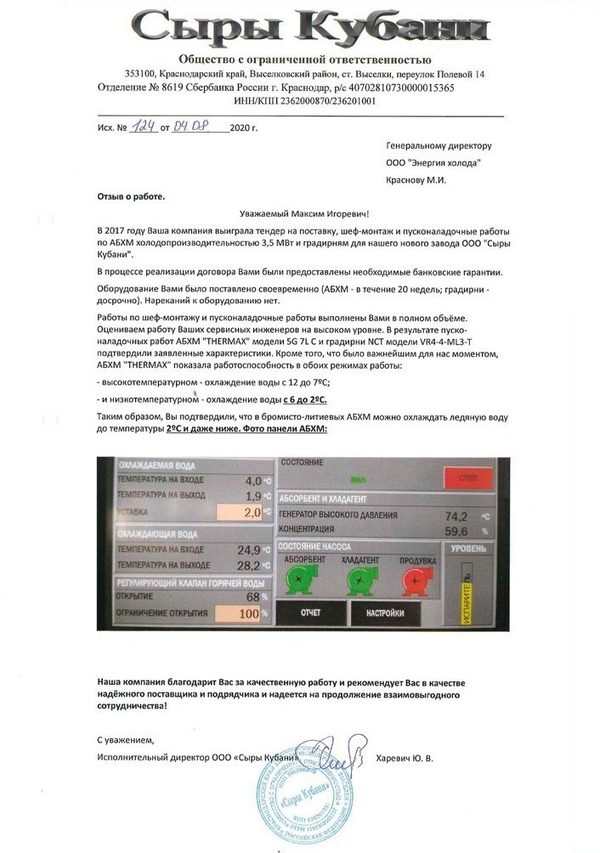
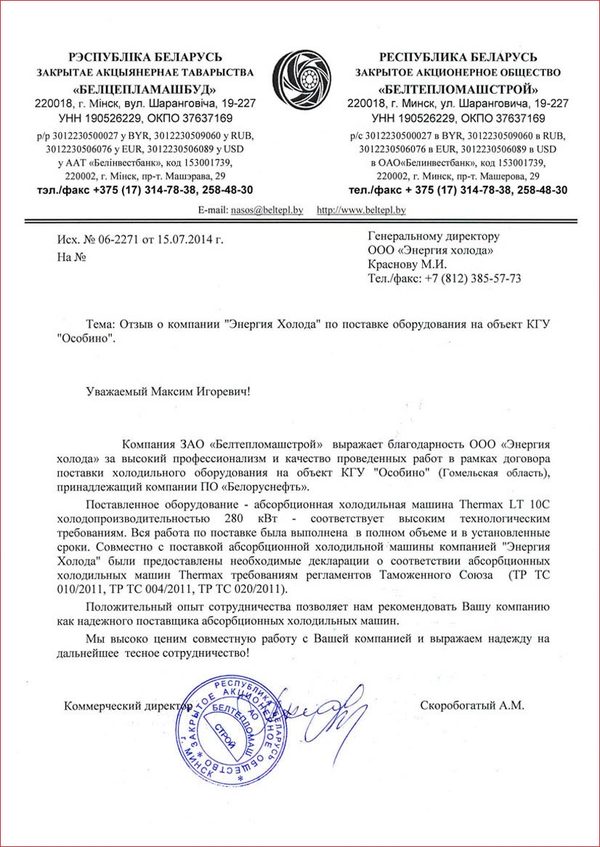
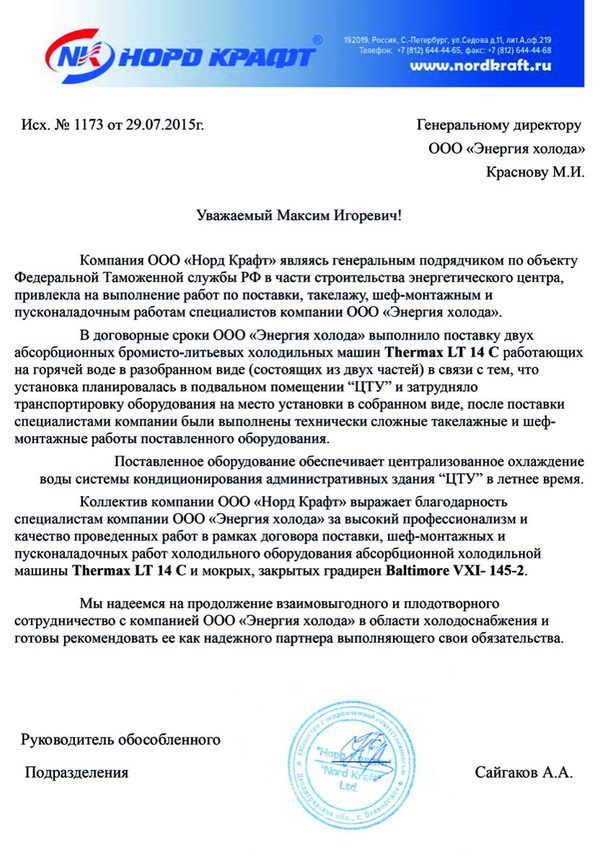
For data centers we rely on international examples and on a model calculation, and our own example of server room cooling from generation heat is the TsTU building in Moscow. In the other sectors we have sites: pharmaceuticals in Pushkin, a dairy plant in the Kuban, food ingredients in Lobnya, shopping malls in Saratov and Kyzylorda, greenhouses in Sverdlovsk Region, business centers in Minsk and Tyumen, radio electronics in Tomsk, a gas turbine plant in Aktobe and many others. The list is on the projects page, customer letters are on the reviews page.
These projects have one thing in common: the cooling has to be connected to the engine so that they do not interfere with each other. These interface points are described on the page about trigeneration mistakes. Cold Energy (NCT) supplies gas engines, Thermax absorption chillers, and NCT cooling towers, chillers and dry coolers.
For comparison, see the world projects. The colden.ru website lists all of the company's equipment.
Sources
Want to check your site?
Send us the cooling and electrical loads, and we will redo the feasibility study for your site. Start with a feasibility study or the calculator: it gives an estimate in a few minutes, and we then check the input data.
Frequently asked questions
What can hot water from production be used for after it has cooled the equipment?
Look at the temperature and the hours. Water from 75 °C is suitable as a drive for an absorption machine; from 80 °C it makes economic sense. Colder water goes to space heating or to an absorption heat pump, which raises its heat to 90 °C. Before selecting anything, build an hourly profile: how many hours a year the water is actually available and when cooling is needed.
Sections

Trigeneration gives a data center cooling from gas engine heat, but a gas engine failure knocks out both power and heat. Backup…
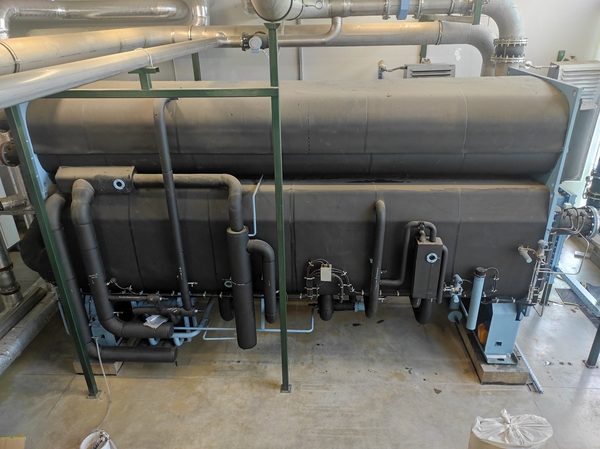
Dairy and food plants need cooling all year, and power and heat go to the lines. What trigeneration gives, its limitations, and…
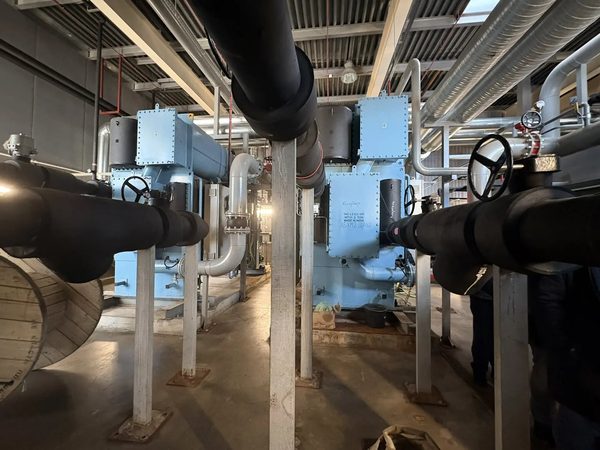
A pharma plant needs cooling all year, and a cooling outage stops the line. How trigeneration covers this load, where its limit…
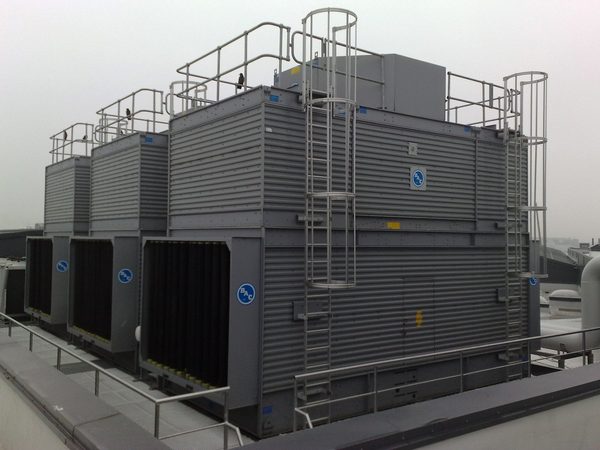
A mall needs cooling mainly in summer, so trigeneration pays back slower than in a data center. What gas engines and absorption…
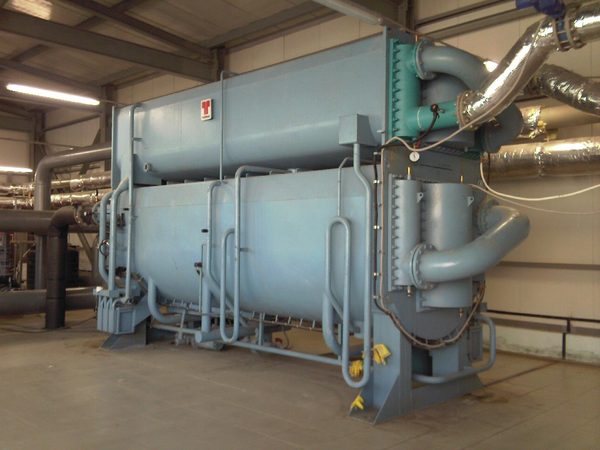
A business center needs cooling for a short season, so trigeneration pays back slowly. When the scheme still makes sense, and…
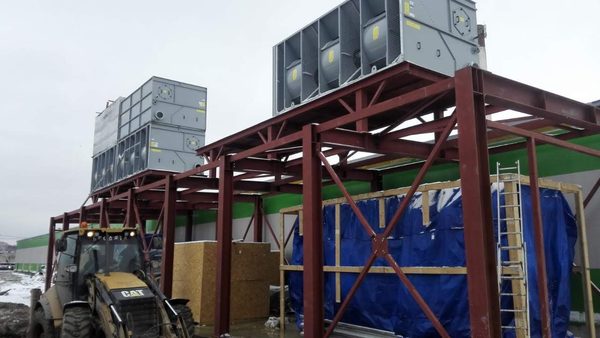
In a greenhouse, gas engines give light, heat and CO2, and cooling is needed only for packing. The scheme, its downsides and a…
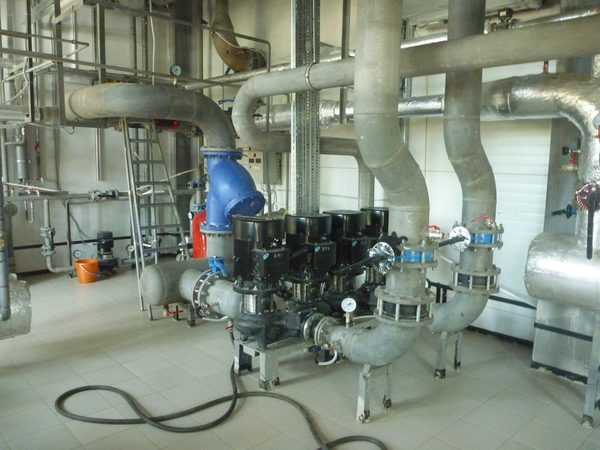
For factories, electronics plants and gas turbine stations, trigeneration turns exhaust heat into process cooling. What fits…
What our customers say
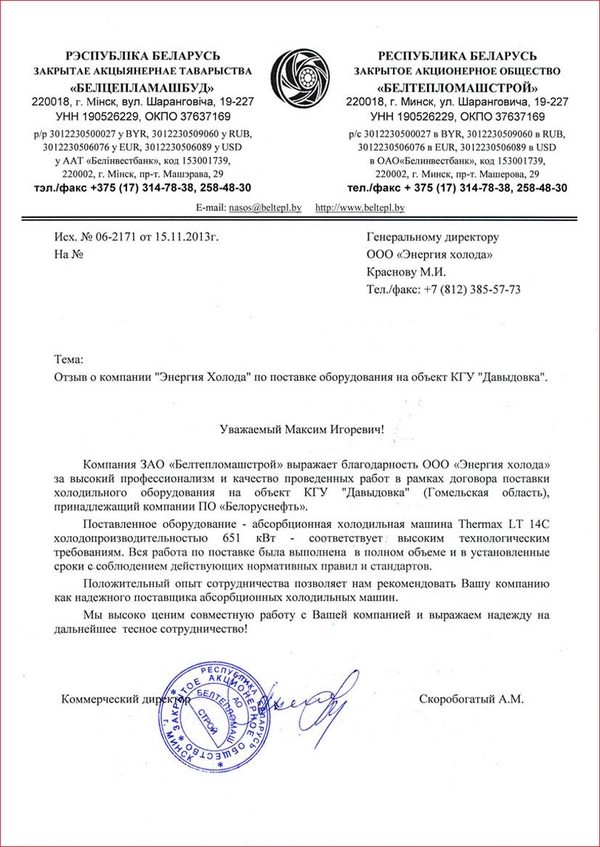
150 letters of thanks · 350+ major projects · 1,000+ customers · in business since 2011. These are real letters from customers; many others are on the references page.
Let us calculate trigeneration for your site
An engineer will put together the scheme and select the equipment, and you get a feasibility study. Free of charge, no obligation.