

Trigeneration: electricity, heat and cooling from one gas supply
In brief. Trigeneration makes electricity, heat and cooling from one gas supply. Engine heat goes to heating in winter and to an absorption chiller in summer, where it becomes cooling. Fuel utilization is 80–85% versus 35–40% for an engine without heat recovery.
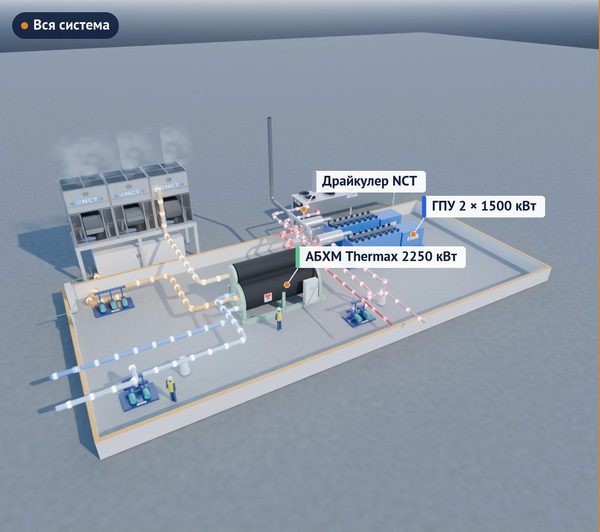
Trigeneration (CCHP, combined cooling, heat and power) is the production of three kinds of energy at one plant from one fuel. A gas engine generator set drives a generator and produces electricity. In winter the engine heat goes to heating and hot water, and in summer it goes to a lithium bromide absorption chiller and turns into cooling. Fuel utilization is 80–85%, while a gas engine without heat recovery uses 35–40%.
How does trigeneration work?
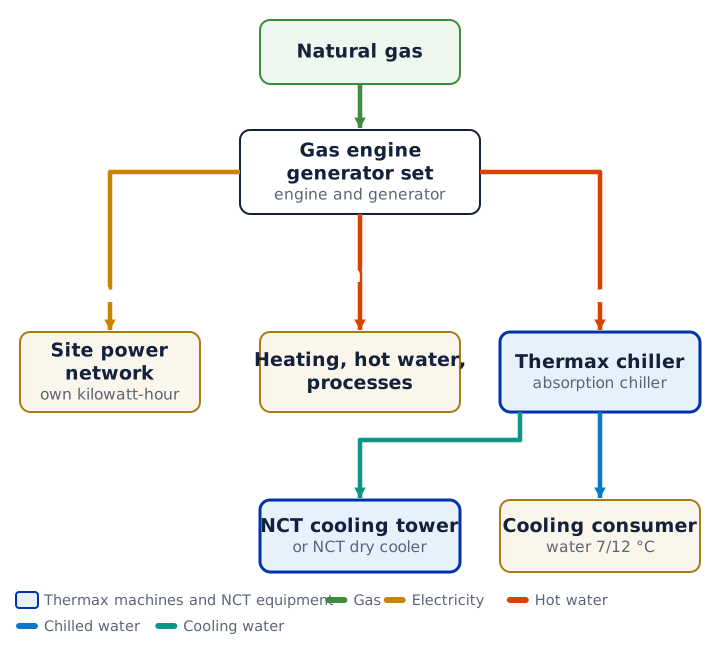
The chain is short: gas, engine, heat, machine, cooling. The facility gets electricity all year round and uses it on site. Engine heat is collected from the engine jacket water and from the exhaust, and the hot water goes to the machine. The heat the machine received with the hot water and removed from the consumer is carried away by a cooling tower or a dry cooler.
Trigeneration: one gas supply, three kinds of energy
Gas goes to the gas engine, electricity goes to the facility, and heat goes to heating in winter and to the absorption chiller in summer. An NCT cooling tower carries away the heat the machine rejects to the cooling water.
How much energy does a megawatt of gas give?
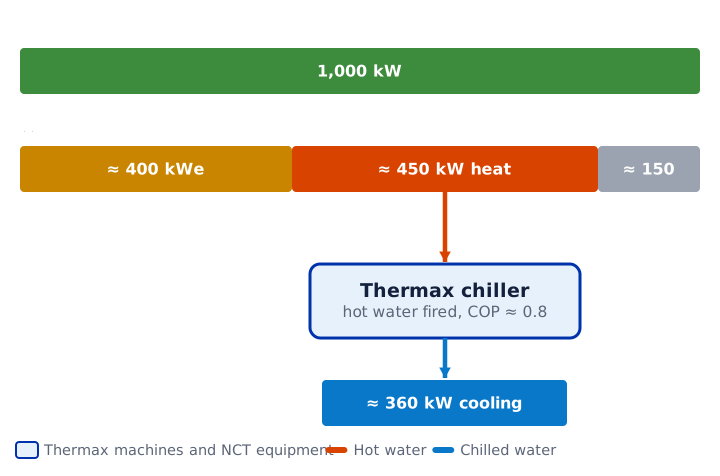
From one megawatt of gas, a gas engine gives roughly 40% electricity and 40–45% heat, 80–85% in total. The rest is lost.
| What | How much |
|---|---|
| Gas input | 1,000 kW |
| Electricity | about 400 kW |
| Engine heat | about 450 kW |
| Losses | about 150 kW |
Then the machine does its work. A single-effect hot water absorption chiller has a coefficient of performance (COP) of 0.65–0.72 in the LT series and 0.75–0.80 in the 5G series. At 0.8, 450 kW of heat gives roughly 360 kW of cooling. Exact figures come from the engine datasheet and the machine selection.
Where a megawatt of gas goes in a gas engine
An estimate for one megawatt: how much goes to electricity, how much to heat, how much to cooling.
If the exhaust is sent directly to a double-effect machine, this heat gives almost twice as much cooling: a COP of 1.40–1.45. But part of the gas sometimes has to be diverted past the machine, and the machine's resistance adds to the resistance of the exhaust duct. What this means for the engine is covered on the trigeneration mistakes page.
How does trigeneration differ from cogeneration?
Cogeneration (CHP) makes only electricity and heat. Heat is needed in winter but not in summer: the heating is off, and hot water uses a small part. Heat already paid for with gas goes to the air through the emergency radiators. Trigeneration finds work for this heat in summer: the same heat goes to the machine and becomes cooling for air conditioning or processes.
Summer: cogeneration versus trigeneration
On the left, heat is dumped to the atmosphere in summer; on the right, it is turned into cooling.
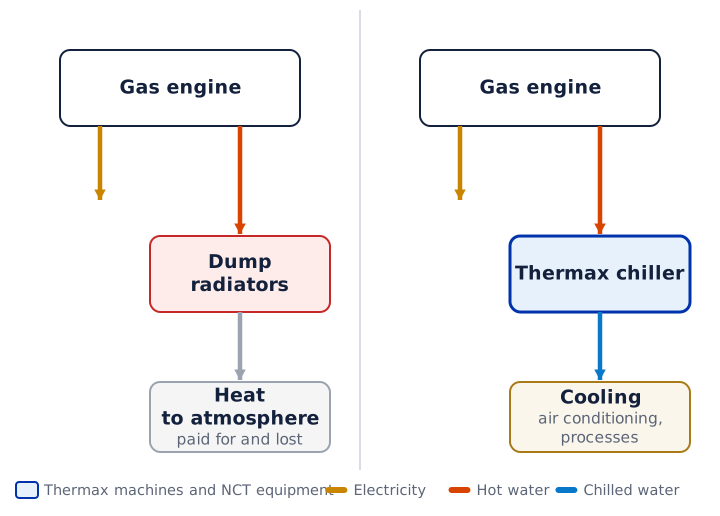
The second benefit: engine utilization rises across the whole year, because in summer its heat is put to use again.
How does the plant's operation change with the seasons?
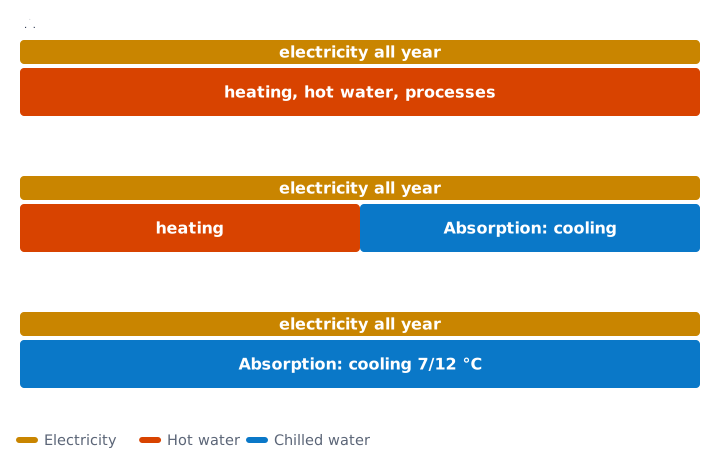
In winter all the heat goes to heating, hot water and processes. In the shoulder seasons it is split between heating and the machine. In summer all the heat goes to the machine, and the consumer gets 7/12 °C chilled water. The plant produces electricity all year round.
Where gas engine heat goes by season
Three seasons, one heat source and different consumers.
For the project, this means one thing: before selection, you calculate not the average load but the load by hour and by month. Whether the plant is worth its money depends on how well the engine heat matches the facility's real heat and cooling demand in each month.
Why is trigeneration better than separate supply?
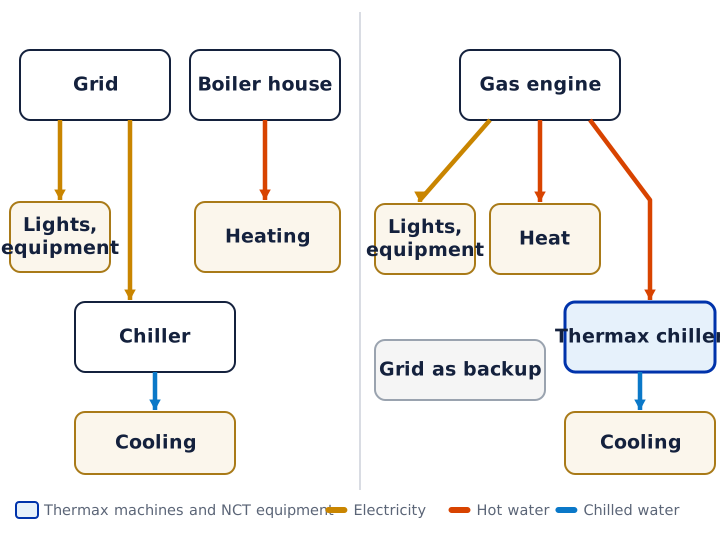
With separate supply, the facility buys electricity from the grid, gets heat from a boiler house and makes cooling with an electric chiller running on the same grid electricity. In trigeneration, one plant makes all three kinds of energy from one gas supply, and the grid remains as a backup.
Separate supply and trigeneration
On the left, three separate sources; on the right, one plant with the grid as a backup.
What this gives in terms of electricity. The absorption chiller itself takes 5–10 kW per megawatt of cooling, the whole chiller plant with pumps and cooling tower 46–130 kW per megawatt. An electric chiller, depending on its seasonal COP, takes 180–350 kW per megawatt. The difference comes off the electricity bill and off the capacity request to the grid.
We state the downsides plainly. An absorption chiller rejects more heat to the cooling tower than an electric chiller: 2.45 kW per 1 kW of cooling for a single-effect machine, 1.72 for a double-effect one and about 1.20 for a chiller with a COP of 5. The cooling tower comes out 1.5–2 times larger. The machine takes up more space and takes about 30 minutes to reach its operating point, so a continuous load needs a backup, for example an NCT chiller for the peak.
When is trigeneration not needed?
Four questions help answer this. If the answer to any of them is "no", there is no point in calculating trigeneration.
Is trigeneration right for the facility: four questions
Gas and the gas allocation, the electricity price, operating hours, cooling capacity.
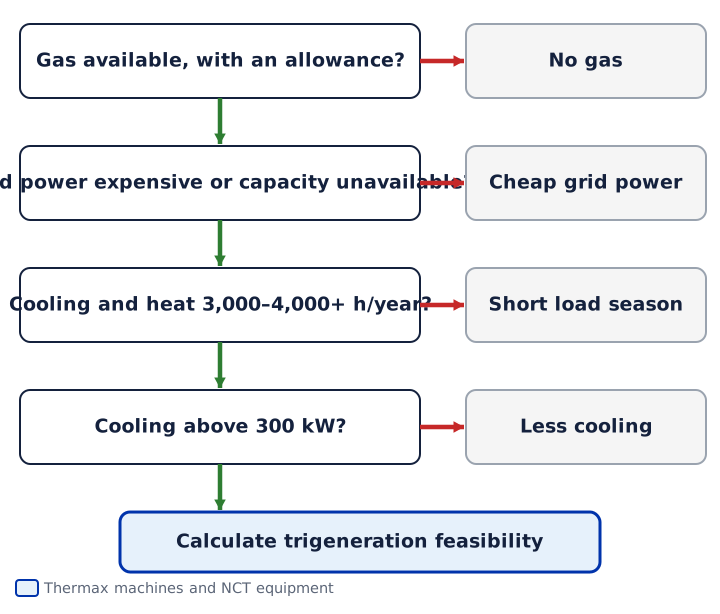
The cooling threshold: from 300 kW. Hours: from 3,000–4,000 hours a year; below 2,000 hours the scheme does not pay off. If there is no gas, a diesel plant or an electric chiller will do. If the grid is cheap and has spare capacity, an electric chiller is usually more cost-effective. For facilities that pass the threshold, we prepare a feasibility study on your data. All calculations on the site are models; they are not an offer.
Who can do trigeneration well?
Trigeneration consists of two parts, electrical and cooling, and it fails at the interface between them. Six such places are covered on the "Trigeneration mistakes" page. They can be handled by whoever is responsible for this interface and sees the whole circuit.
Cold Energy (NCT) is the official representative of Thermax in Russia and the CIS. Thermax has more than 8,300 cooling and heating installations worldwide. In Russia and the CIS, Thermax machines are supplied only by Cold Energy. NCT cooling towers, chillers and dry coolers, design, supply, installation supervision, commissioning and service are brought together in one company; you can see our facilities in the "Projects" section. More about the equipment: Thermax absorption chillers, trigeneration schemes and types of trigeneration by engine.
With us, you can order the gas engine, the cooling circuit and the interface between them from one company. If the engine and the cooling are split between different contractors, the interface belongs to no one, while the cooling has to match what this particular engine delivers.
Want to know what trigeneration would give your facility? Order a feasibility study or estimate the numbers yourself in the calculator.
Frequently asked questions
How much heat for an absorption chiller will gas engines give?
The Jenbacher JMC 320 gives about 1.15 kW per 1 kW of output, the JMC 420 about 1.01. Ask for a table for the 100, 75 and 50% points, separately for exhaust and water. Cooling is free only while the unit runs at rated output for the whole season.
What type of absorption chiller is best with gas engines?
The classic: the jacket and the exhaust heat exchanger heat water for a single-effect machine. More cooling comes from ordering the gas engine without a heat recovery module and feeding the exhaust at about 400 °C directly. This takes experience: sometimes there is a lot of exhaust gas and little demand, and the excess goes past the machine.
What our customers say
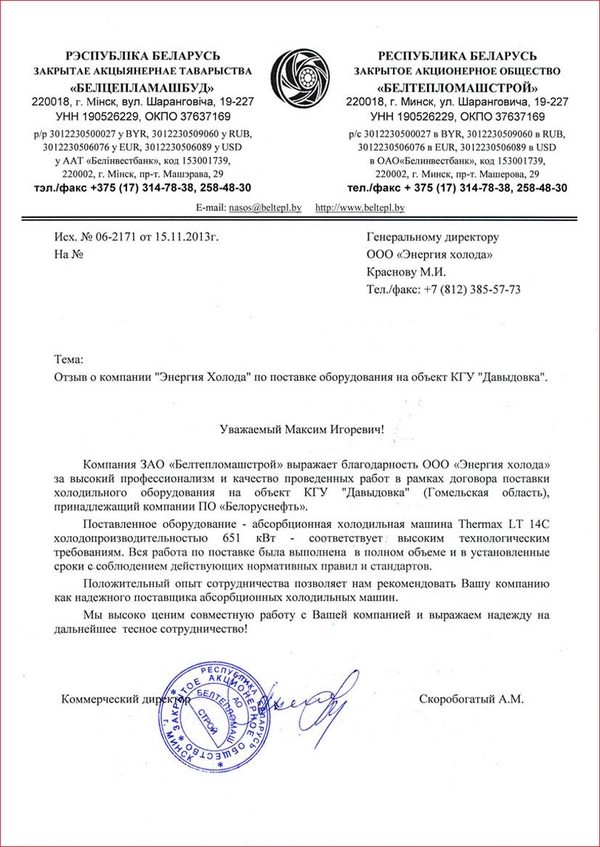
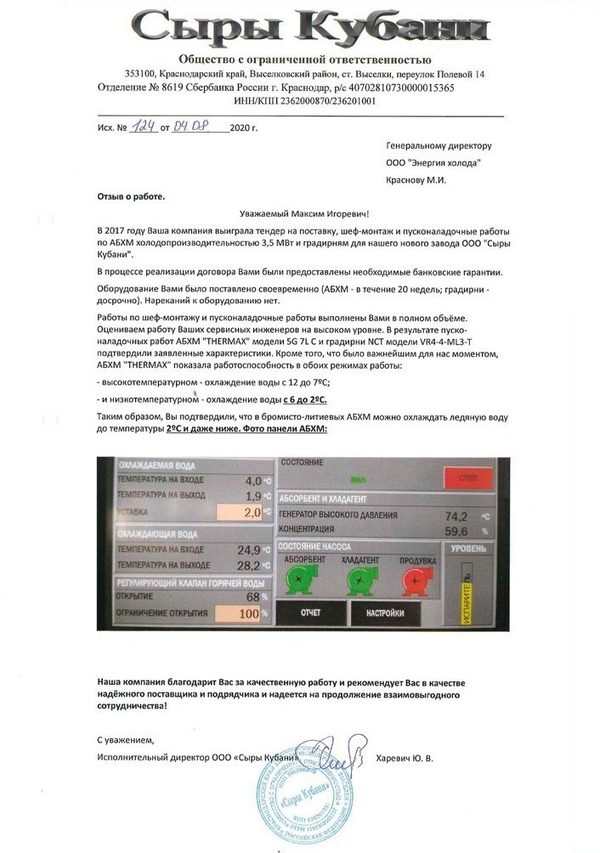
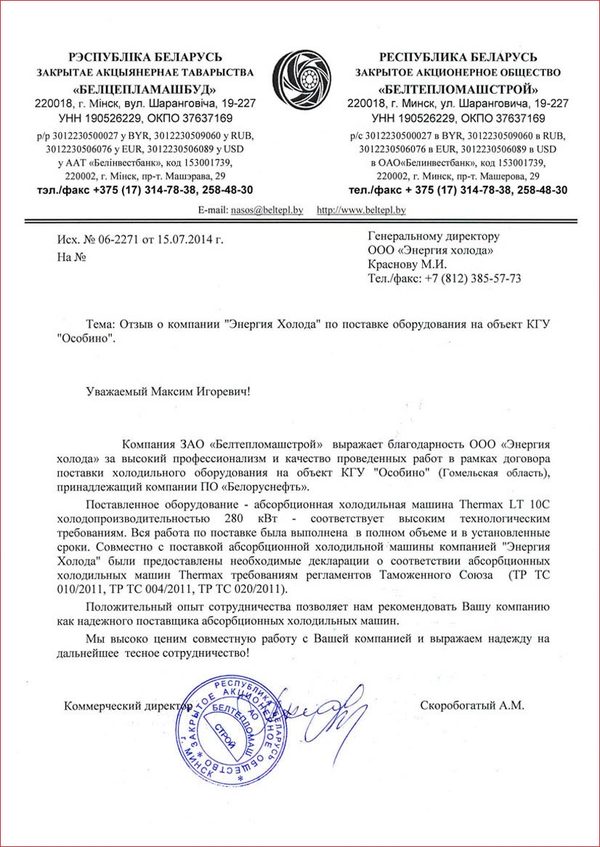
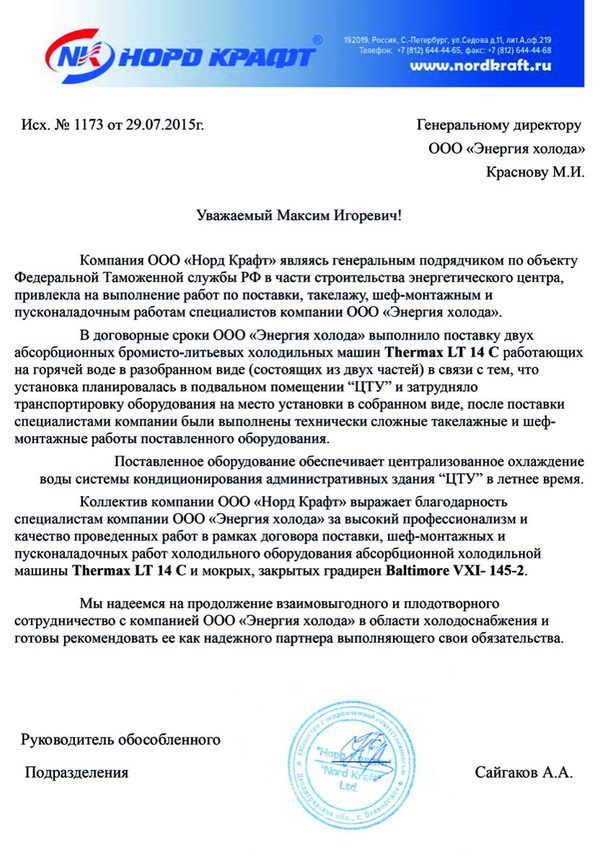
150 letters of thanks · 350+ major projects · 1,000+ customers · in business since 2011. These are real letters from customers; many others are on the references page.
Let us calculate trigeneration for your site
An engineer will put together the scheme and select the equipment, and you get a feasibility study. Free of charge, no obligation.