

Trigeneration plant: what it consists of and who supplies what
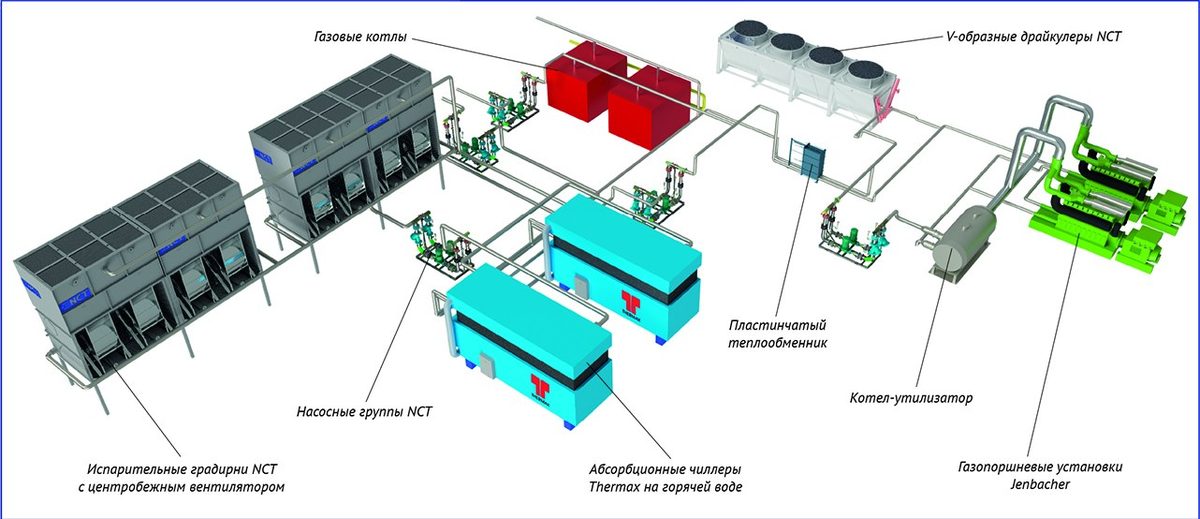
In brief. A trigeneration plant consists of a gas engine with a generator and a cooling circuit. The circuit includes a heat recovery unit, an absorption chiller, a cooling tower or dry cooler, a peak chiller, pumps and controls.
A trigeneration (CCHP) plant is a gas engine with a generator plus everything that turns its heat into cooling and rejects the surplus. The engine provides electricity and heat. Then the cooling circuit takes over: the heat recovery unit collects the heat, a lithium bromide absorption chiller turns it into cooling, and a cooling tower or dry cooler rejects what the chiller did not use. While the site has only an engine, it is cogeneration (CHP). The cooling circuit turns it into trigeneration.
How gas becomes electricity, heat and cooling
Gas goes into the engine. Electricity goes to the consumer, the jacket and exhaust heat goes to a Thermax chiller, which makes 7/12 °C water, and the heat of the chiller itself is rejected by an NCT cooling tower.
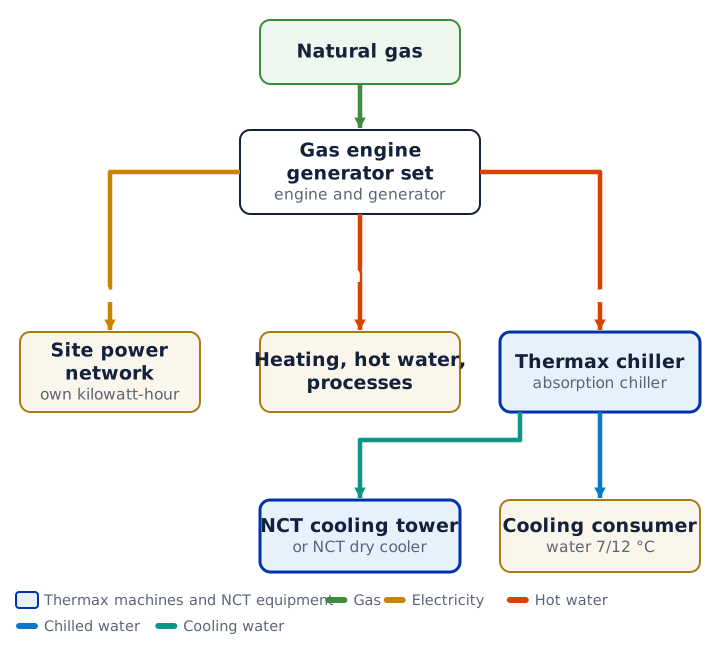
What parts does a trigeneration plant consist of?
There are seven parts, and the heat pump is not always needed. We also supply the first part, the engine with a generator: these are gas engine generator sets. It is selected for the heat and the load profile, and everything after it is the cooling circuit.
| Part | What it does | More |
|---|---|---|
| Engine with generator (gas engine, gas turbine, microturbine) | provides electricity and heat | gas engines, types of trigeneration |
| Heat recovery: heat recovery steam generator, heat exchanger | takes heat from the jacket and exhaust | schemes |
| Thermax absorption chiller | turns heat into cooling | absorption chiller series |
| NCT cooling tower or dry cooler | rejects the chiller's heat to the atmosphere | cooling towers, dry coolers |
| NCT chiller | covers the peak and provides backup | chillers |
| Absorption heat pump, depending on the task | takes heat from the cooling water | absorption heat pump |
| Pumps, water treatment, controls | connect the parts and protect the chiller | controls |
How much energy does the plant deliver?
From 1 MW of gas, the engine gives about 40 % electricity and 40–45 % heat, 80–85 % in total. That is about 400 kW of electricity and about 450 kW of heat. An engine without heat recovery uses 35–40 % of the fuel; the rest goes up the stack and into the radiator.
Where a megawatt of gas goes
From 450 kW of heat, a hot water absorption chiller with a coefficient of 0.8 makes about 360 kW of cooling. If you take the exhaust heat and give it to a double-effect chiller, the same heat gives twice as much cooling.
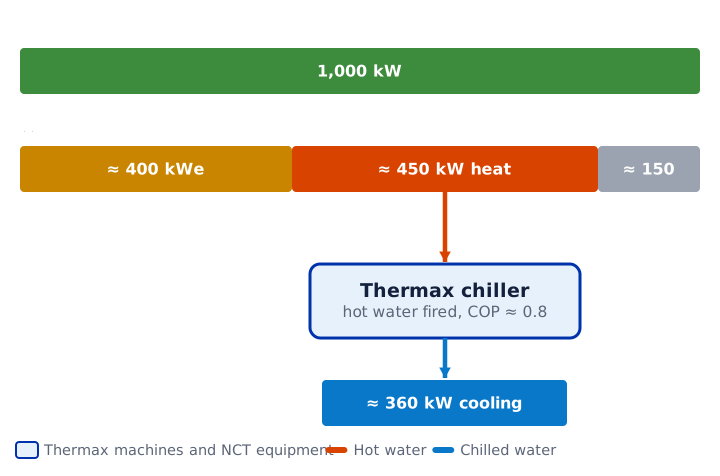
The COP is the ratio of the cooling produced to the heat consumed. For hot water chillers it is below one, and for double-effect chillers on exhaust, steam and gas it is 1.30–1.45. That is why the type of heating medium determines which chiller to install.
How do schemes differ by heat source?
The choice is driven by the heat temperature and what the site needs.
| Heat source | Absorption chiller series | COP |
|---|---|---|
| Hot water from the jacket and heat recovery unit | LT, 5G | LT 0.65–0.72, 5G 0.75–0.80 |
| Engine or turbine exhaust | 2D | 1.40–1.45 |
| Exhaust and hot water in one chiller | Trigenie | exhaust about 1.4, water about 0.8 |
| Steam from a heat recovery steam generator | 2B, SD | 1.30–1.45 |
Details on each series: Thermax absorption chillers and exhaust-fired absorption chillers, Trigenie. Which scheme suits your engine, see the sections on gas engines and gas turbines.
How does the plant work through the seasons?
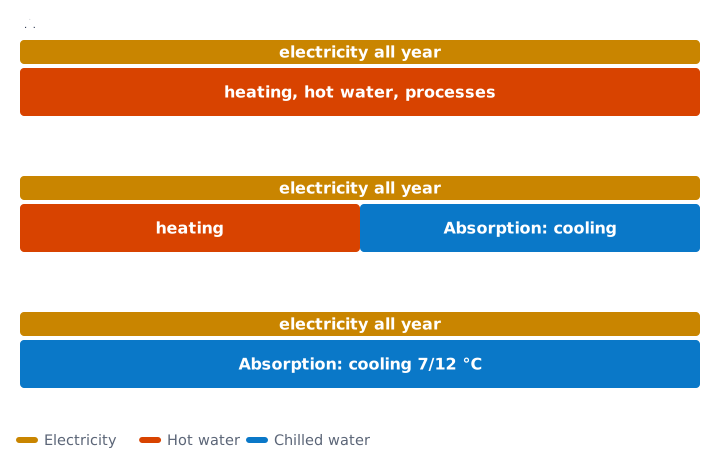
This is the main difference between trigeneration and cogeneration. In winter cogeneration uses engine heat for space heating, and in summer it dumps it to the atmosphere through radiators. In summer trigeneration sends the same heat to the absorption chiller and gets cooling. The engine is loaded all year round.
Where engine heat goes by season
In winter the heat goes to space heating, hot water and process needs. In the shoulder season it is split between heating and the chiller. In summer it goes to the chiller and gives 7/12 °C water. The site gets electricity all year round.
What happens when the engine is down? The grid connection remains as a backup, and the chiller can get heat from the boiler house: this is how the scheme with two heat sources works at a greenhouse complex in Sverdlovsk Region. An NCT chiller covers the peak and backs up while the absorption chiller reaches its operating mode, which takes about 30 minutes. More: NCT chillers.
Where does a trigeneration plant break down?
Most often between the machines. Six places where mistakes are made: exhaust back pressure, engine jacket overheating when the chiller stops, return temperature, engine load and cooling demand out of step, crystallization on power loss, and untreated cooling tower water.
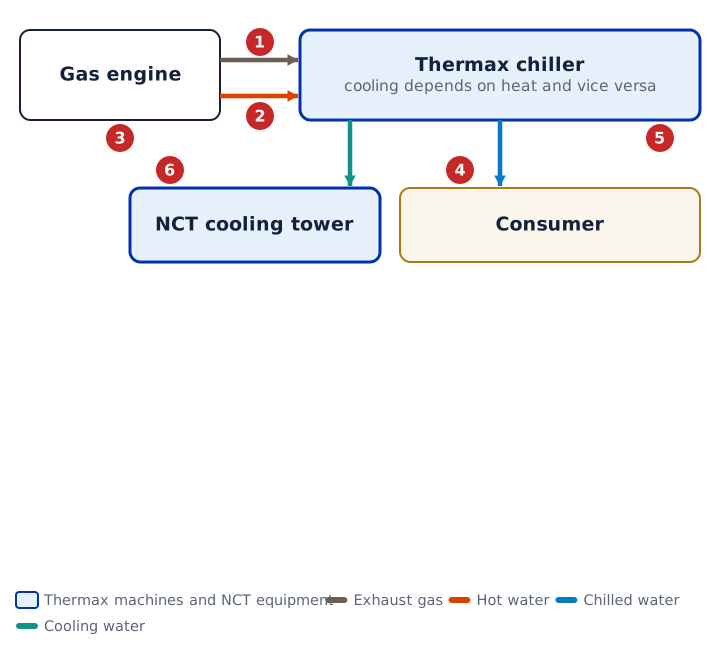
Each of them lies on the boundary between the engine and the cooling circuit. If they are split between different contractors, the interface belongs to no one, and a mistake there turns into a dispute. That is why it makes sense to give the gas engines, the cooling circuit and the interface between them to one company. A breakdown with figures: why trigeneration does not pay back.
What does Cold Energy (NCT) supply?
You can order gas engines, the cooling circuit and the interface between them from one company: gas engines, Thermax absorption chillers, NCT cooling towers, dry coolers and chillers, pump skids, water treatment and controls. For the cooling circuit we handle design, supply, installation supervision, commissioning and service. The company has been operating since 2011 and is the official representative of Thermax in Russia and the CIS. In Russia and the CIS, Thermax chillers are supplied only by Cold Energy. We calculate the engine and the cooling together, because the exhaust and the jacket determine which chiller will be installed.
Sites where our chillers work with gas engines and turbines are described in the Projects section: the Syry Kubani cheese plant, the Teplichnoye greenhouse complex, Mikran and many others. More on NCT equipment at nc-t.ru.
How do you know you need such a plant?
Four questions. Is there gas and a gas allocation. Is electricity expensive, or can the grid not provide the capacity. Are heat and cooling needed for at least 3,000–4,000 hours a year. Is the cooling load above 300 kW. Four "yes" answers mean trigeneration is worth calculating. Below 2,000 hours a year an absorption chiller does not pay back.
You can request a feasibility study for your site, and a quick estimate is available in the calculator.
Sections
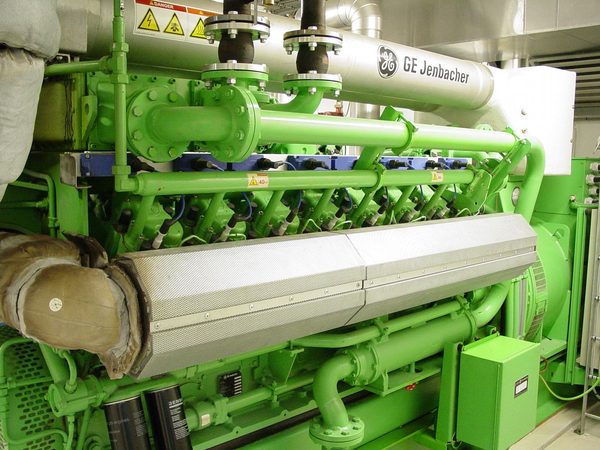
We supply gas engine generator sets for trigeneration with cooling. How the engine is sized by heat and load profile, and what…
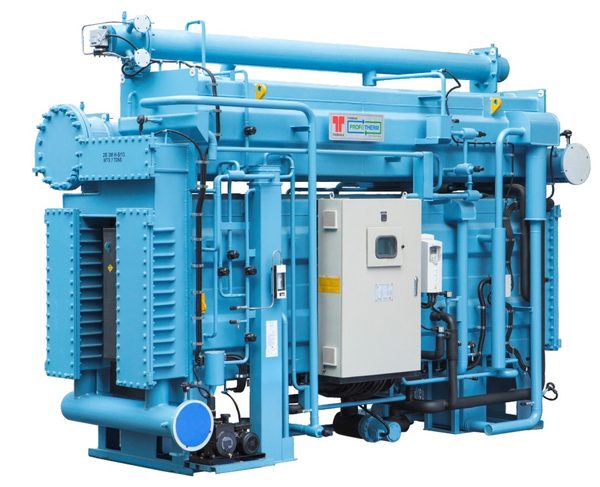
Thermax absorption chiller series on hot water, steam, gas and exhaust: their COP, capacity from 70 kW, how they differ and…
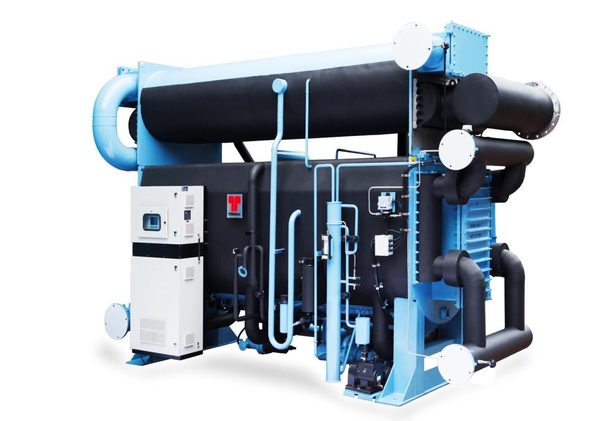
Exhaust-fired Thermax absorption chillers (2D) and Trigenie take engine exhaust and jacket heat in one machine. COP about 1.4…
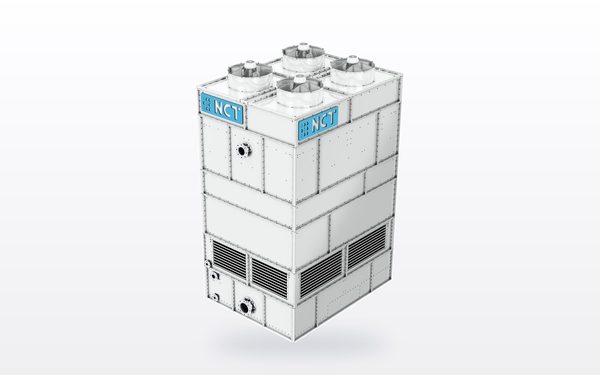
NCT cooling towers for absorption chillers: open or closed-circuit, how much heat to reject, a bypass against crystallization…
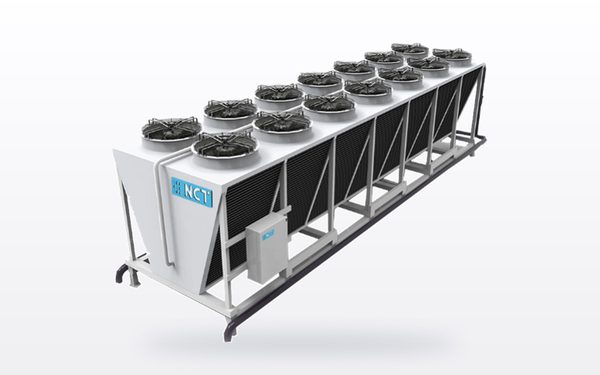
NCT dry coolers from 300 kW, from RUB 500,000, up to 5-year warranty. When a dry cooler beats a cooling tower, absorption…
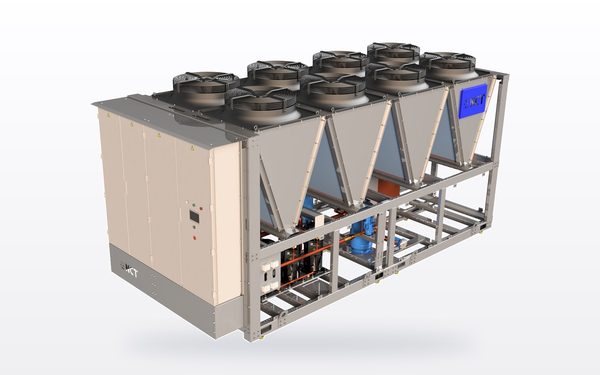
Why trigeneration needs an NCT electric chiller: peak load, backup while the absorption chiller starts up, series and parallel…
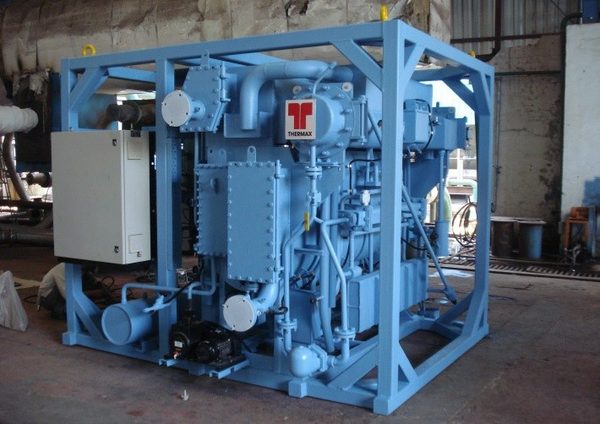
A Thermax absorption heat pump from 250 kW takes heat from cooling water and delivers hot water up to 90 °C, COP 1.65–1.75…
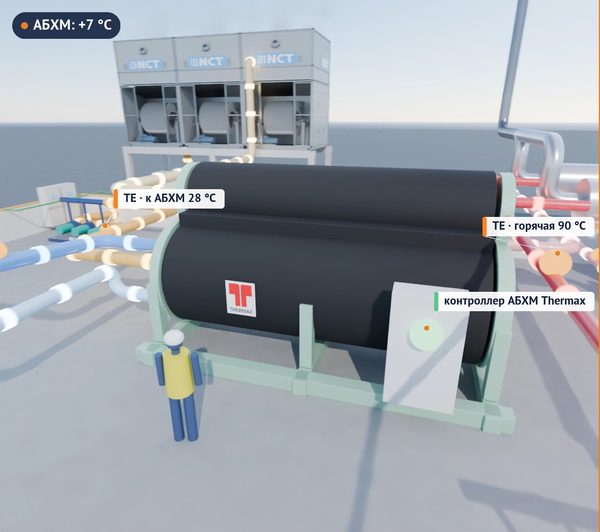
What links the gas engine, absorption chiller and cooling tower: controller, SCADA, pump skids, NCT W0C, W2C, W3C water…
What our customers say
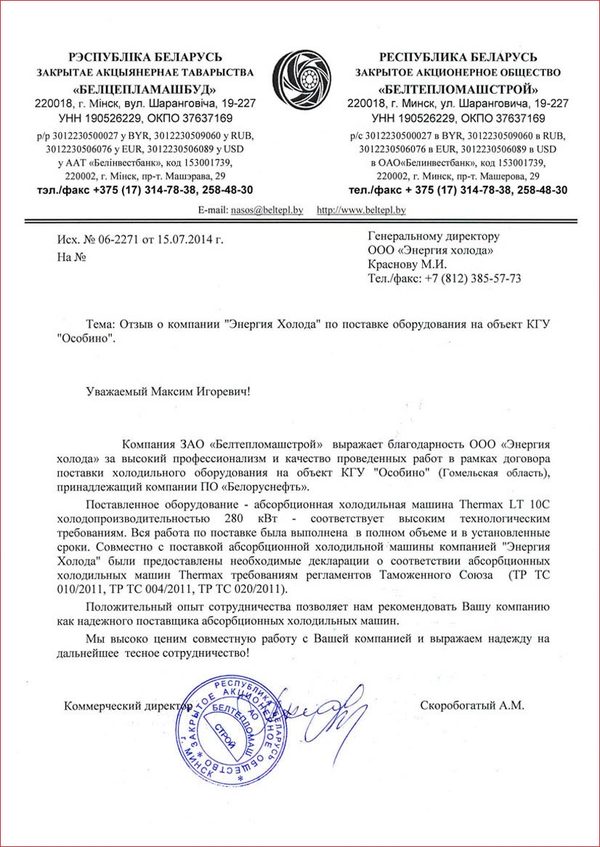
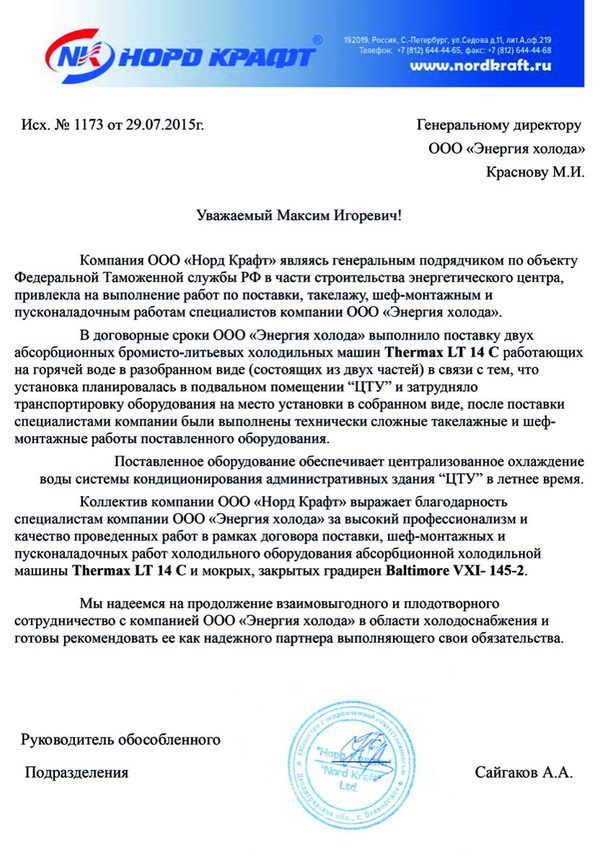
150 letters of thanks · 350+ major projects · 1,000+ customers · in business since 2011. These are real letters from customers; many others are on the references page.


Let us calculate trigeneration for your site
An engineer will put together the scheme and select the equipment, and you get a feasibility study. Free of charge, no obligation.