

Central Customs Administration: cooling in the basement of an old building
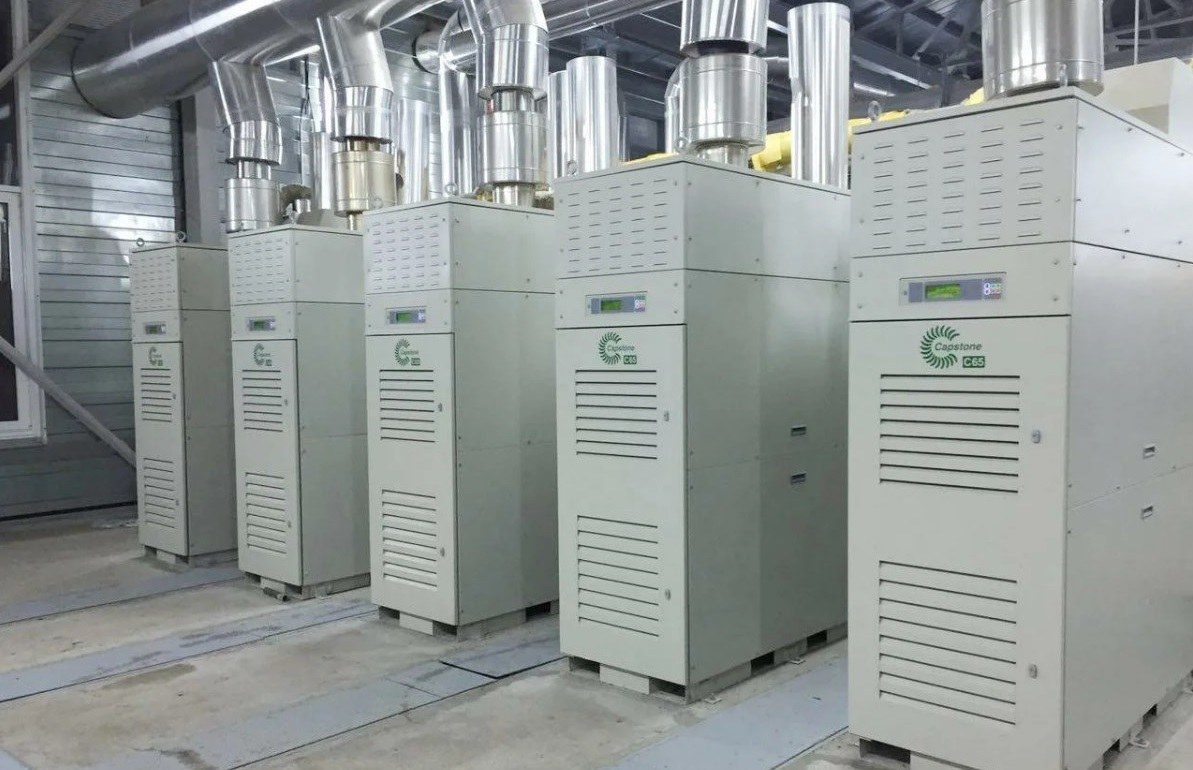
In brief. In a historic building in central Moscow, two 500 kW Thermax LT-14 C absorption chillers run on the heat of five Capstone C200 microturbines. The chillers were brought in parts and assembled in the basement. Part of the cooling goes to the server rooms.
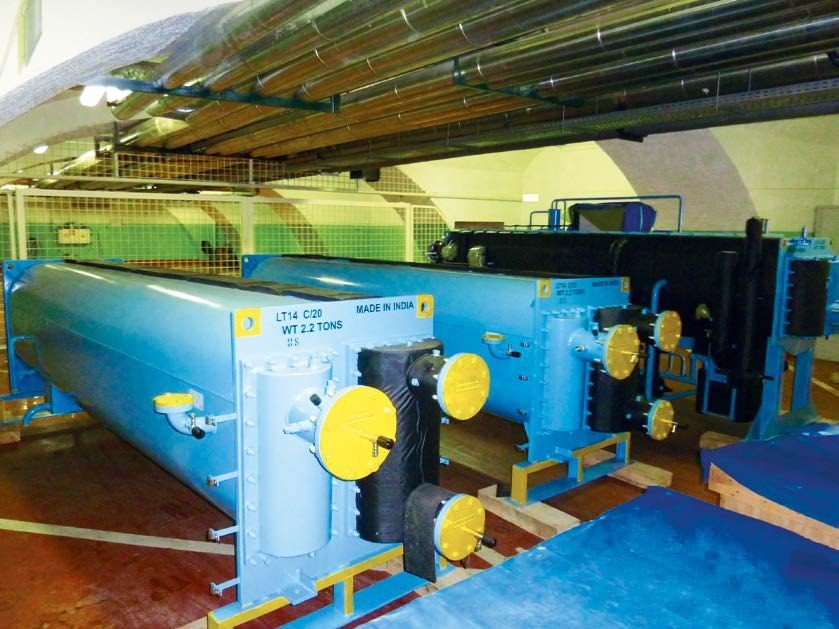
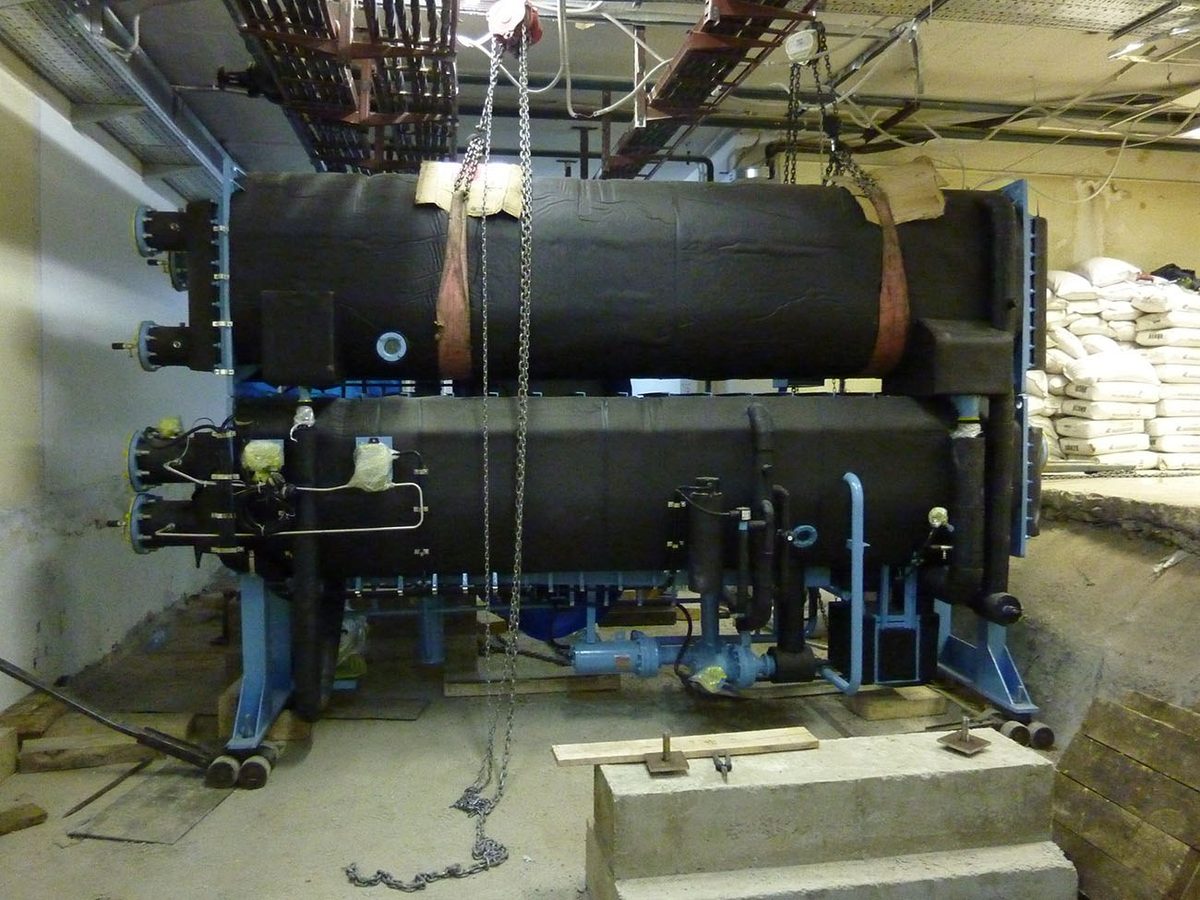
In the historic building of the Central Customs Administration in Moscow, a chiller plant has been built on the heat of five Capstone C200 microturbines. Two Thermax LT-14 C lithium bromide absorption chillers of 500 kW each cool water for air conditioning, and part of the cooling goes to the server rooms. The chillers were delivered disassembled and assembled in the basement.
| Parameter | Data |
|---|---|
| Industry | Government institution, historic building |
| City | Moscow |
| Generation | 5 Capstone C200 microturbines of 200 kW each, heat recovery unit, boiler house and heat recovery boilers |
| Heat | Hot water from the boiler house and heat recovery units |
| Absorption chillers | 2 × Thermax LT-14 C, 500 kW each, water 12/7 °C |
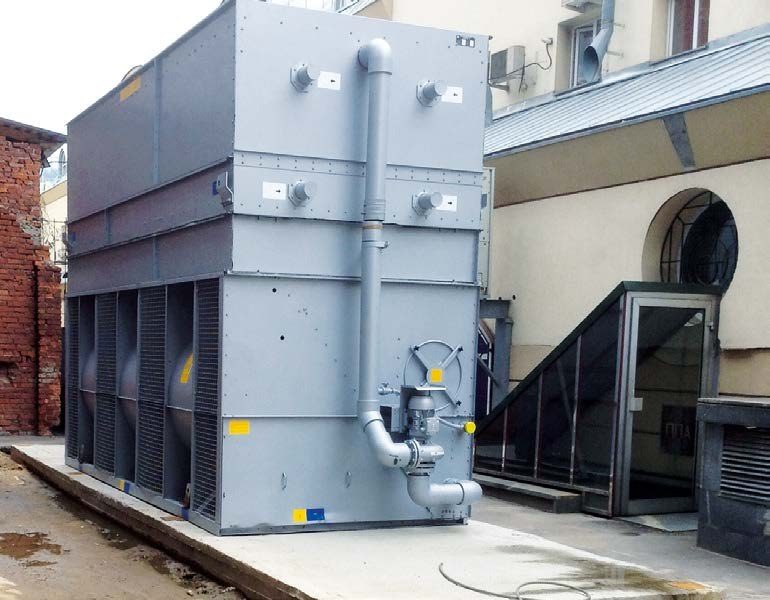
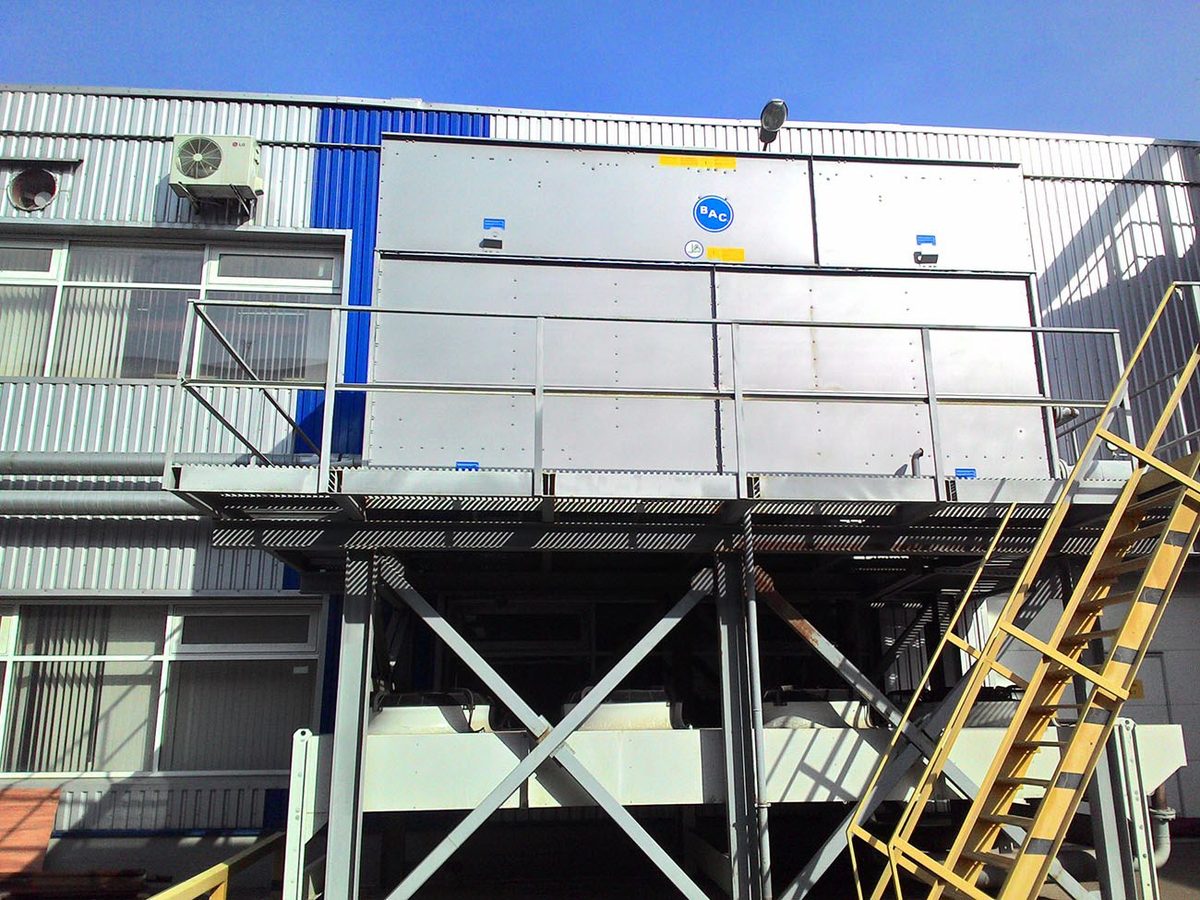
| Heat rejection | 2 closed-circuit wet cooling towers |
| What the cooling is for | Air conditioning of the administrative building, part of the cooling for server rooms |
| Our work | Supply, rigging, installation supervision, commissioning |
What was the task?
The building stands in the historic center, where there is not enough electrical capacity. Compressor chillers would have required even more electricity, so cooling for the building and the server rooms is made from the heat of a mini power plant on microturbines. It was commissioned around 2015.
How does the scheme work?
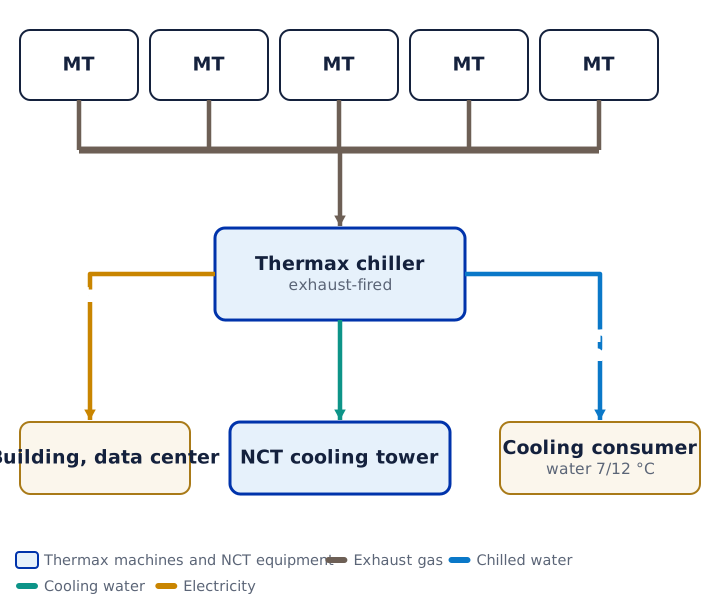
Microturbines and an absorption chiller
The microturbines produce electricity, and their heat goes into hot water through a heat recovery unit. The water, together with heat from the boiler house, drives the absorption chillers, which supply cooling to the building network.
What was difficult?
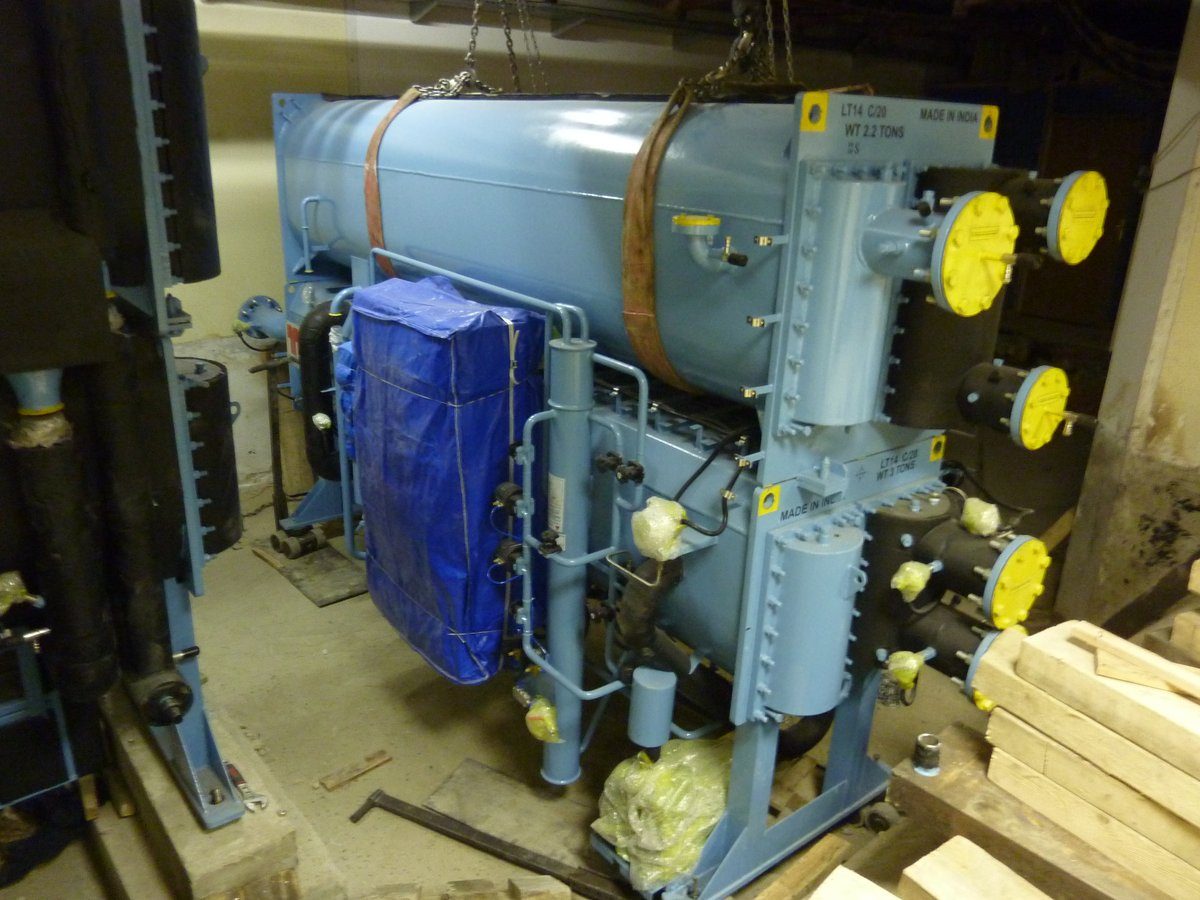
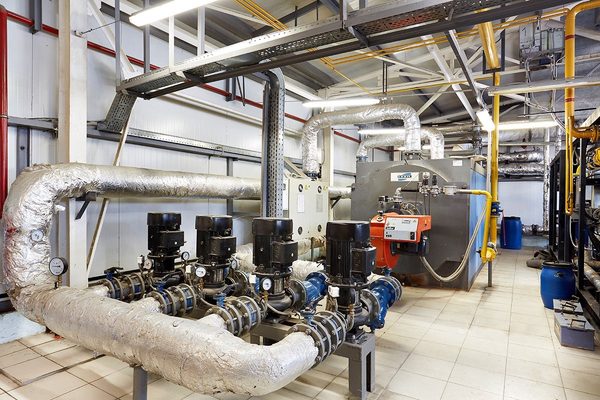
The basement of the old building, with its narrow passages, cannot take a whole chiller. Each absorption chiller was delivered disassembled, in two parts, and assembled on site: this required complex rigging and installation supervision.
What was the result?
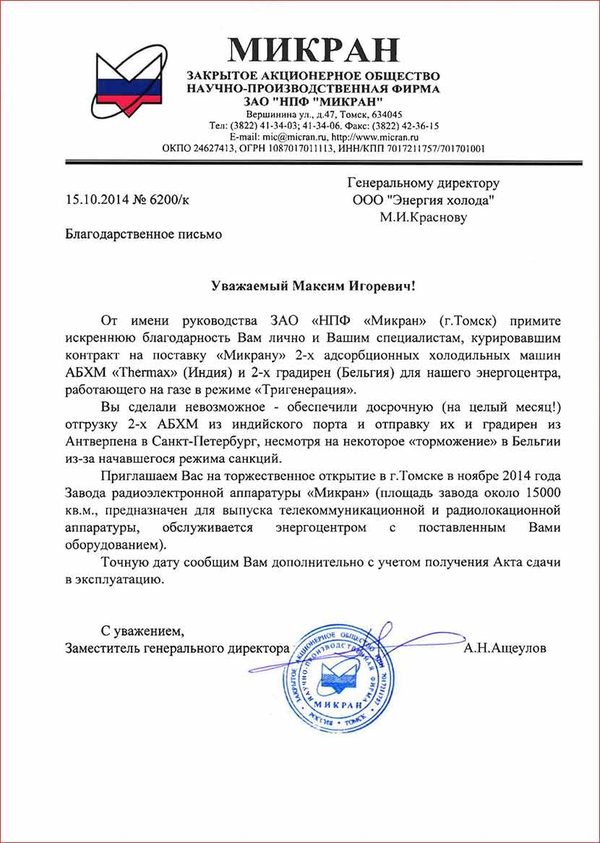
The chiller plant was successfully started up. The general contractor's letter of 29 July 2015 confirms on-time delivery, rigging, installation supervision and commissioning.
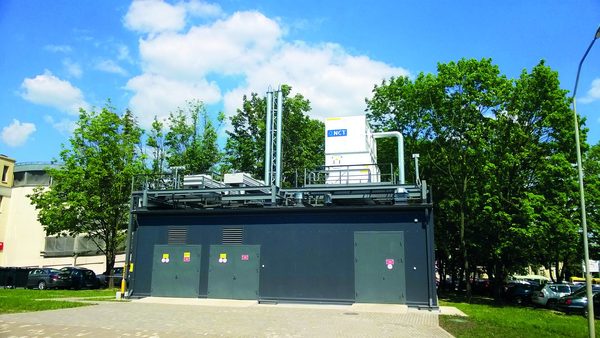
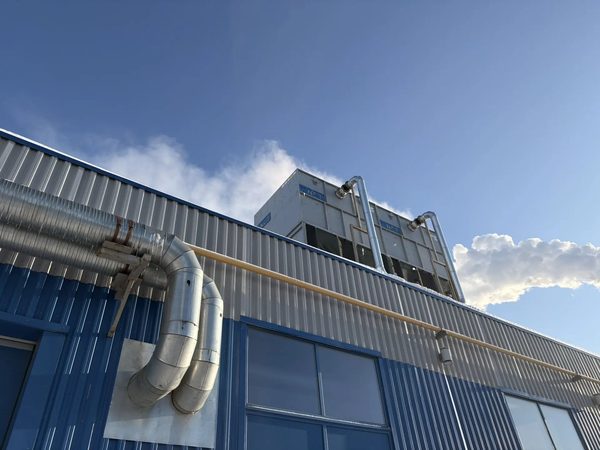
Site photos
General contractor's letter
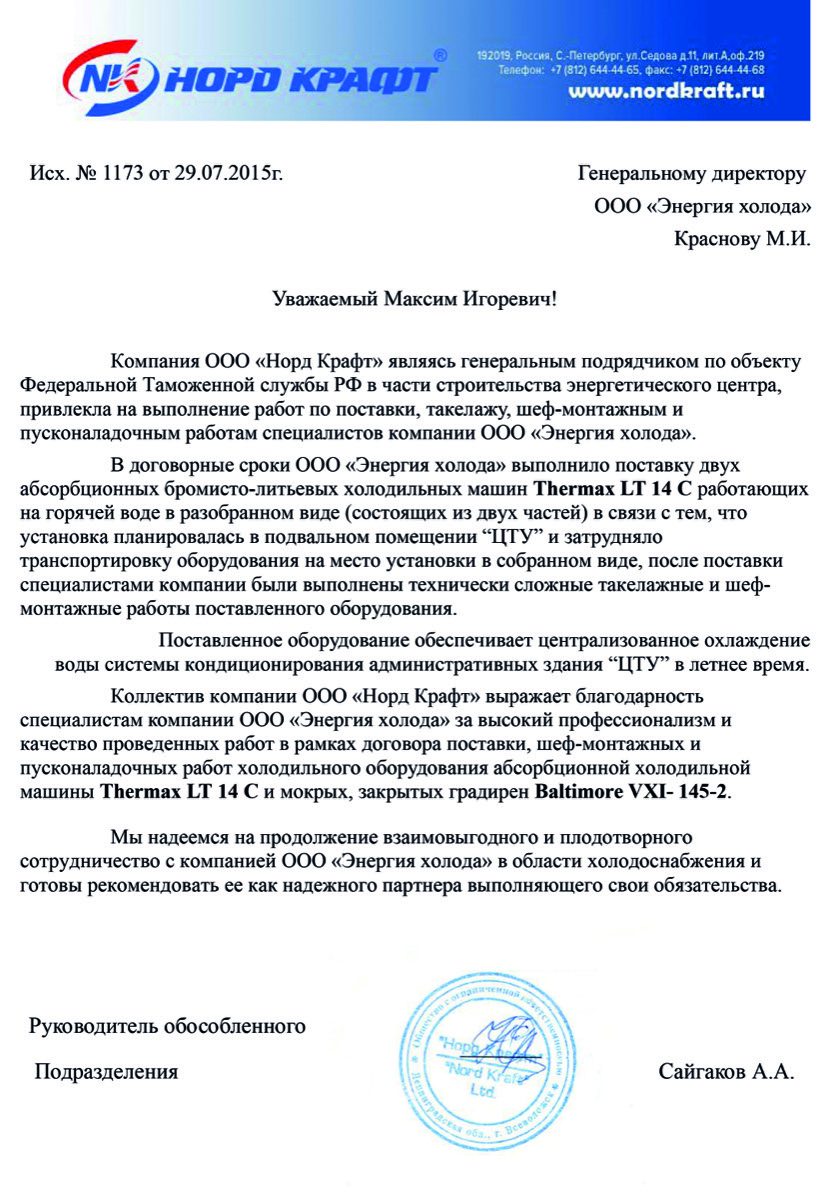
Letter of 29 July 2015, ref. No. 1173: thanks for the on-time delivery of two LT 14 C absorption chillers, rigging, installation supervision and commissioning.
If you have a similar task, order a feasibility study or estimate the figures in the calculator. Related pages: microturbines, business centers and hotels and trigeneration for data centers. The chiller design is described on the page Thermax absorption chiller, and other examples are collected in the "Our projects" section, along with many others.
Other projects
Tyumen, a 15-story Class A business center: a Thermax absorption chiller on hot water from gas engine waste heat, 12/7 °C…
Minsk, class B1 business center: a 500 kW Thermax LT 18C absorption chiller on heat from two Bosch gas engines, NCT cooling…
Pushkin, an API plant: 2 Jenbacher J320 gas engines and two 1,430 kW Thermax TAC L5 E3 absorption chillers, water 12/7 °C. In…
What our customers say
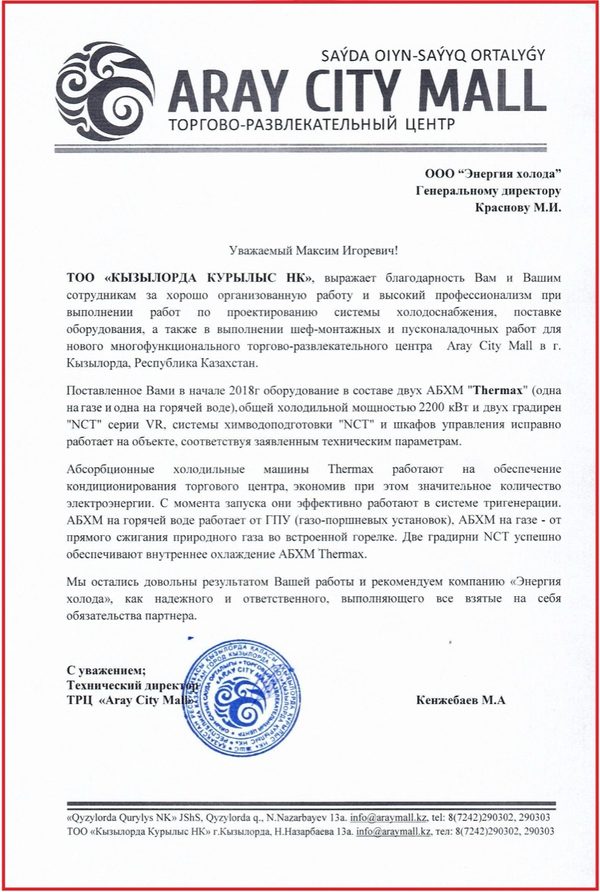
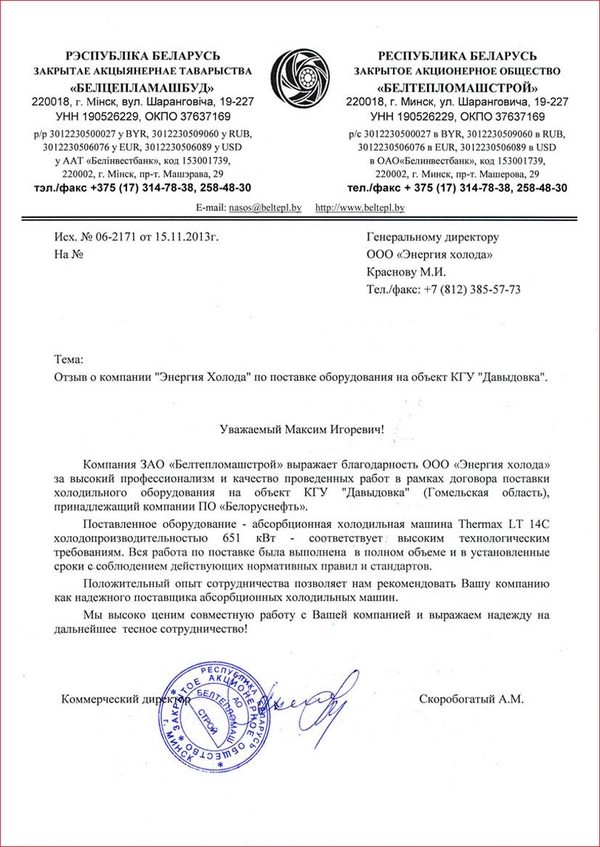
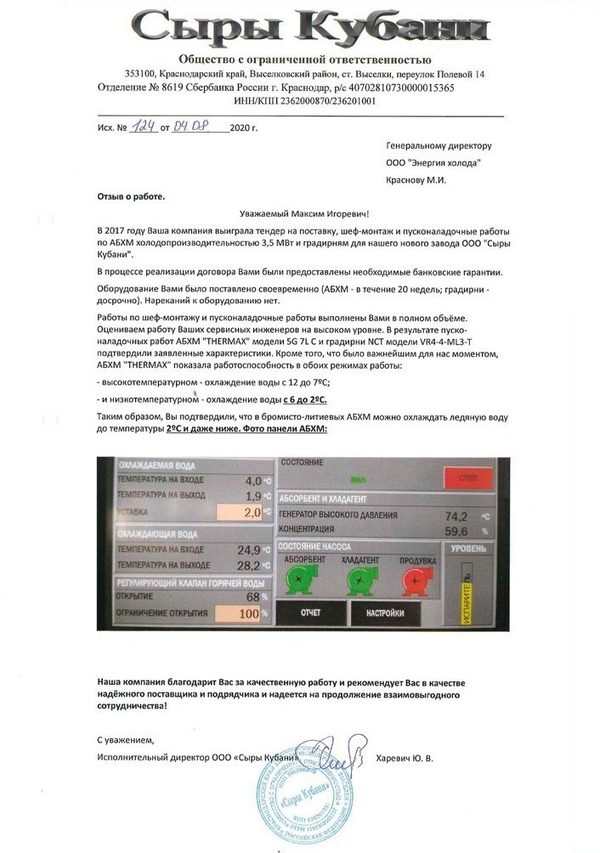
150 letters of thanks · 350+ major projects · 1,000+ customers · in business since 2011. These are real letters from customers; many others are on the references page.
Let us calculate trigeneration for your site
An engineer will put together the scheme and select the equipment, and you get a feasibility study. Free of charge, no obligation.