

Döhler food ingredients plant: cooling down to 0 °C from gas engine heat
In brief. At the Döhler plant in Lobnya, a 1,500 kW Thermax absorption chiller turns gas engine heat into cooling down to 0 °C for pasteurizers. The scope of supply includes NCT cooling towers, dry coolers and water treatment.
At the Döhler food ingredients plant in Lobnya, a 1,500 kW Thermax lithium bromide absorption chiller makes cooling from the heat of gas engine generator sets and cools propylene glycol down to 0 °C for pasteurizers. We carried out a turnkey supply: from design to commissioning. Supply was completed in 2019.
| Parameter | Data |
|---|---|
| Industry | Food ingredients, fruit juice concentrates |
| City | Lobnya, Moscow Region |
| Generation | Energy center with gas engines |
| Heat | Hot water from gas engines |
| Absorption chiller | 1 × Thermax TZC L5 G4, 1,500 kW, propylene glycol at 14/0 °C |
| Heat rejection | 2 NCT VR4 cooling towers with basin heating, 2 dry cooling towers (dry coolers) with free cooling, 2 plate heat exchangers |
| What the cooling is for | Cooling of pasteurizers in juice concentrate production |
| Our work | Design documentation, supply, installation supervision, commissioning |
What was the task?
The pasteurizers in juice concentrate production need cooling down to 0 °C, so the coolant here is propylene glycol. The gas engine energy center was rebuilt together with the construction of a new production and warehouse complex, and the cooling is made from engine heat.
How does the scheme work?
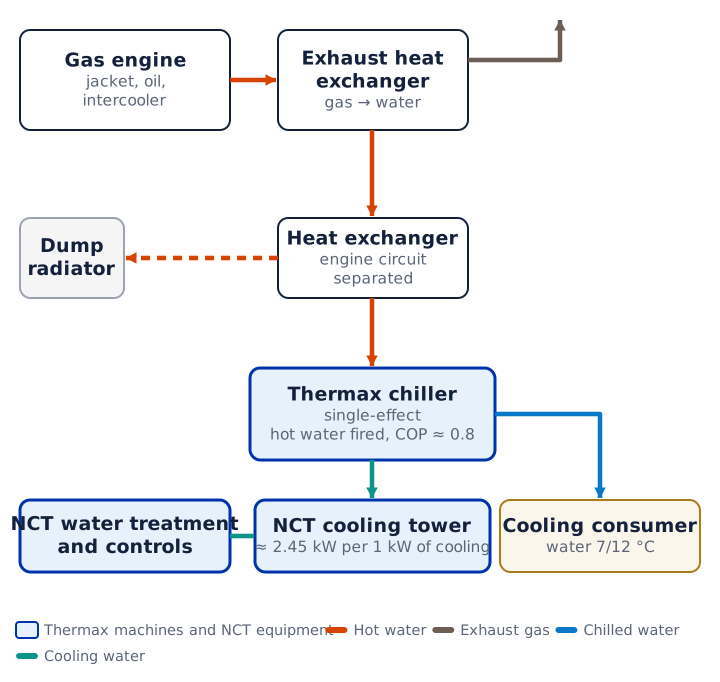
The classic: gas engines and a hot water absorption chiller
Hot water from the engines drives the absorption chiller, which cools the propylene glycol. The heat is rejected by NCT cooling towers.
How to reject heat: cooling tower or dry cooler
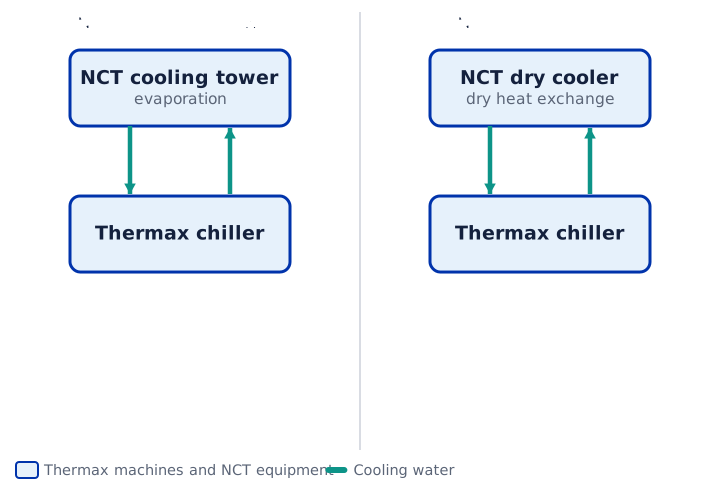
The plant has both wet cooling towers and dry ones (dry coolers), plus a free cooling system with plate heat exchangers. In winter cooling is produced without running the chiller.
What was the result?
The customer got all the chiller plant equipment from one company: design, cooling towers, dry coolers, water treatment, pump skids and the absorption chiller. The materials contain no figures on the effect.
Site photos
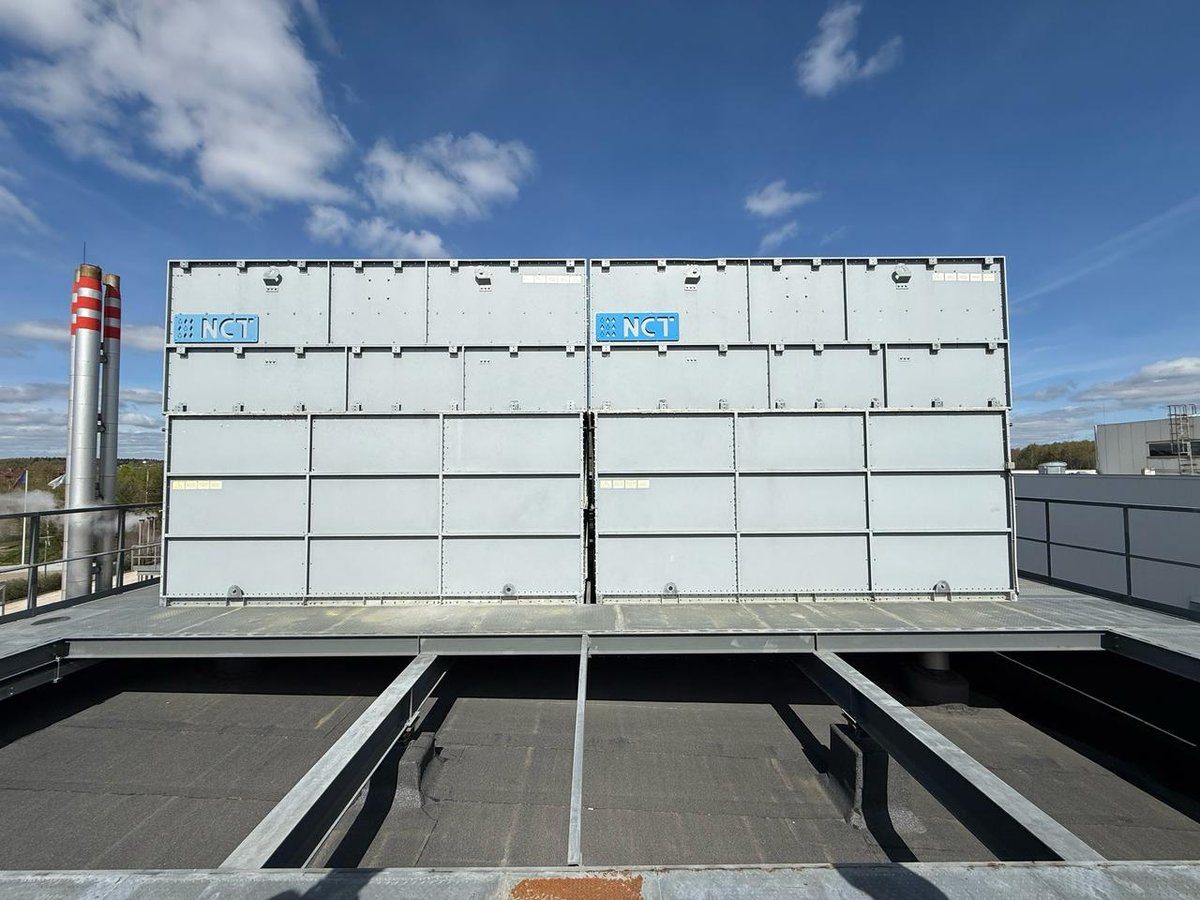
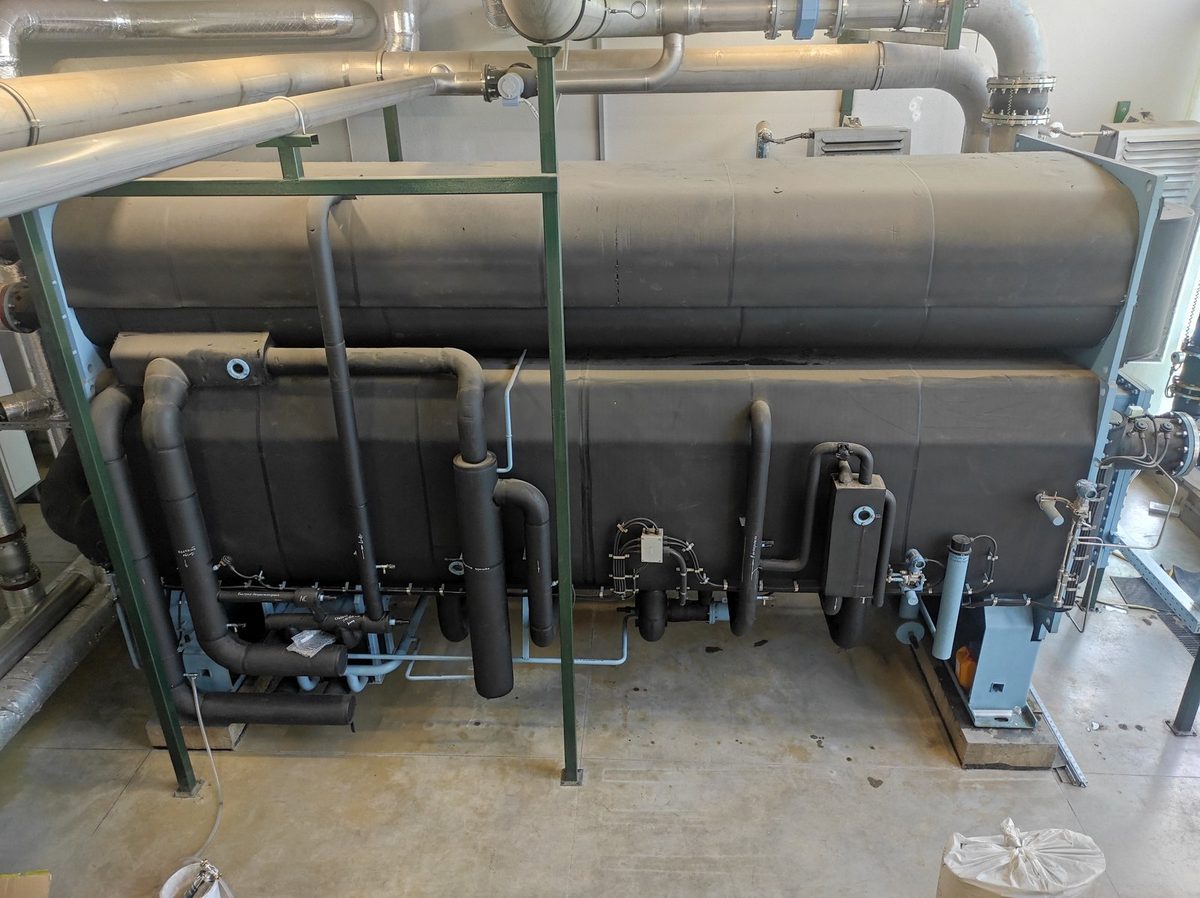
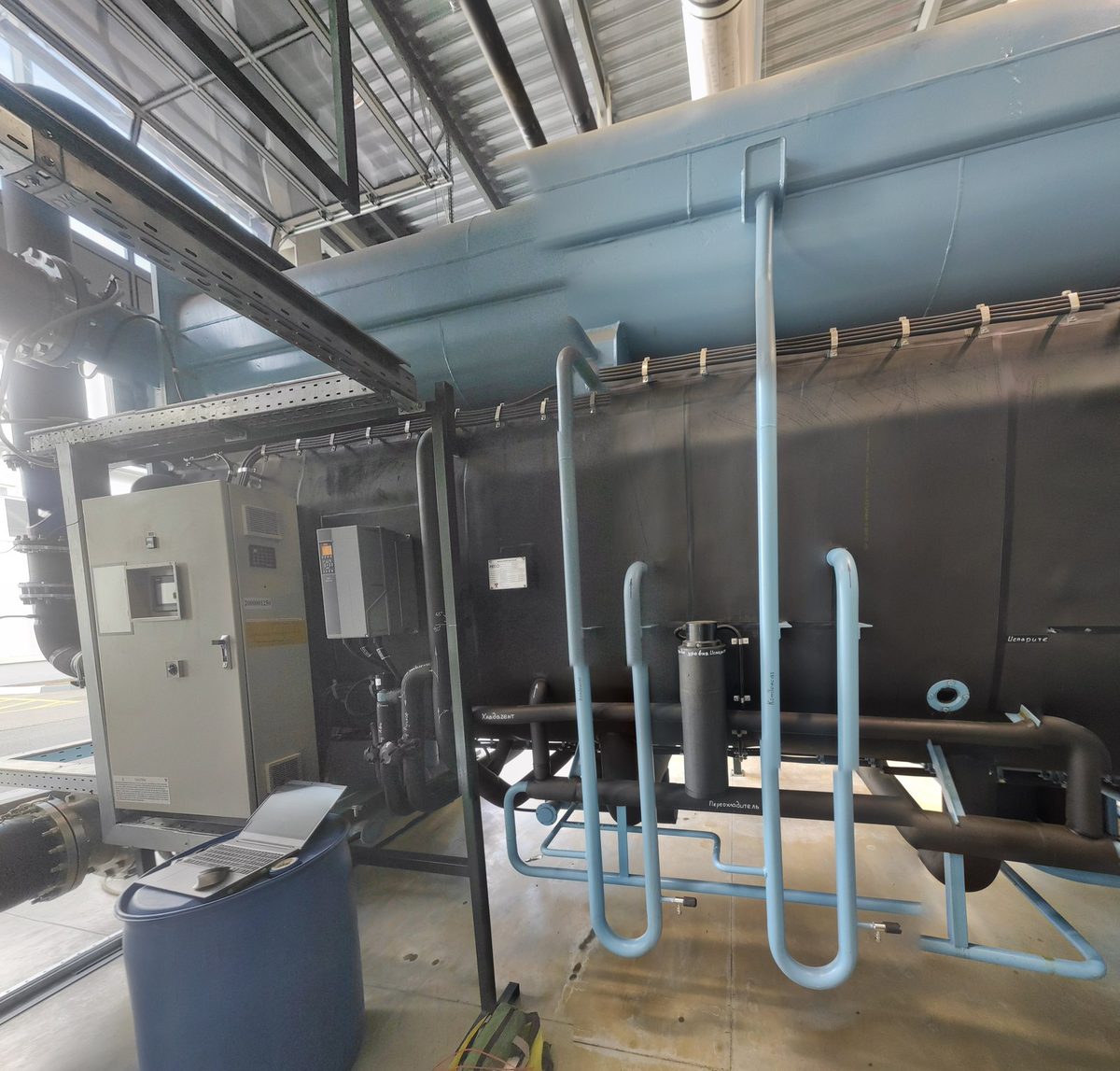
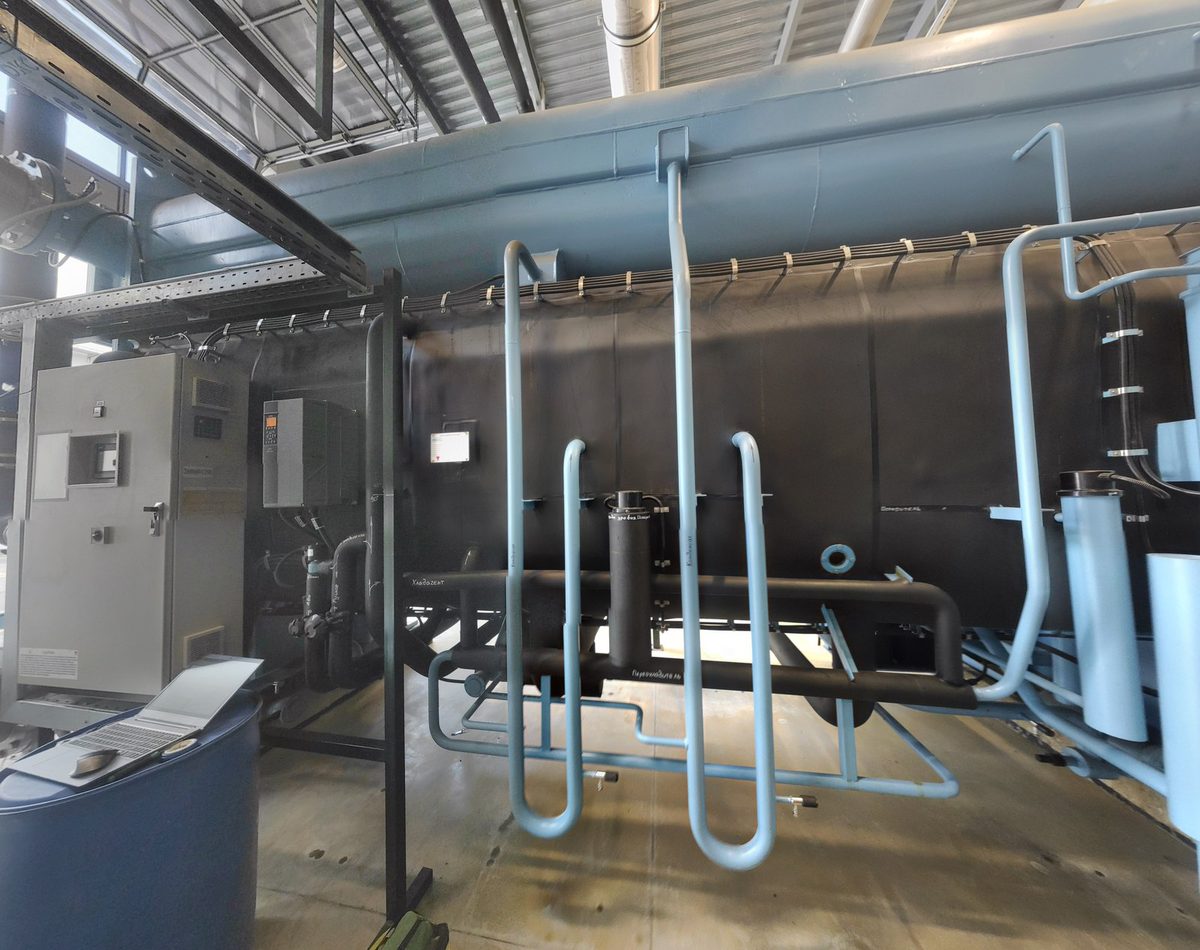
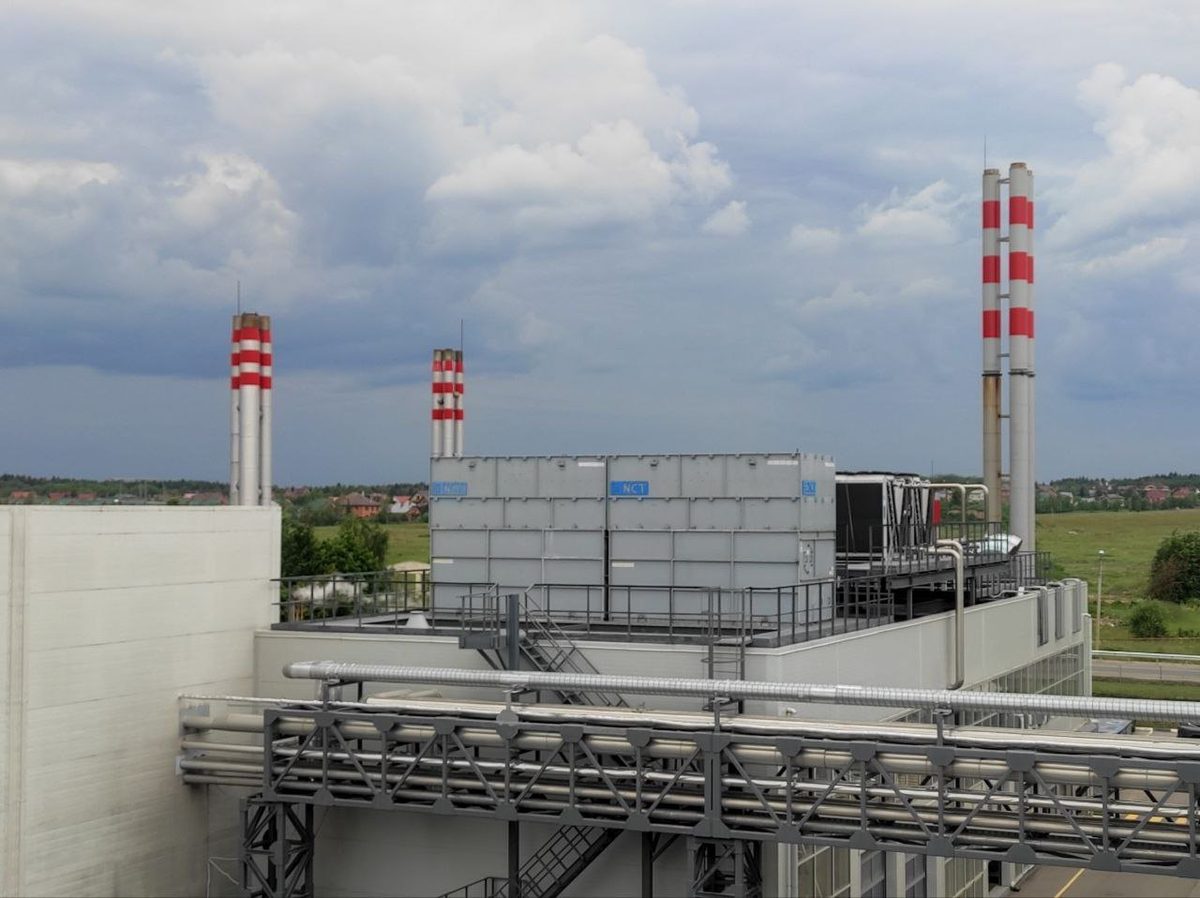
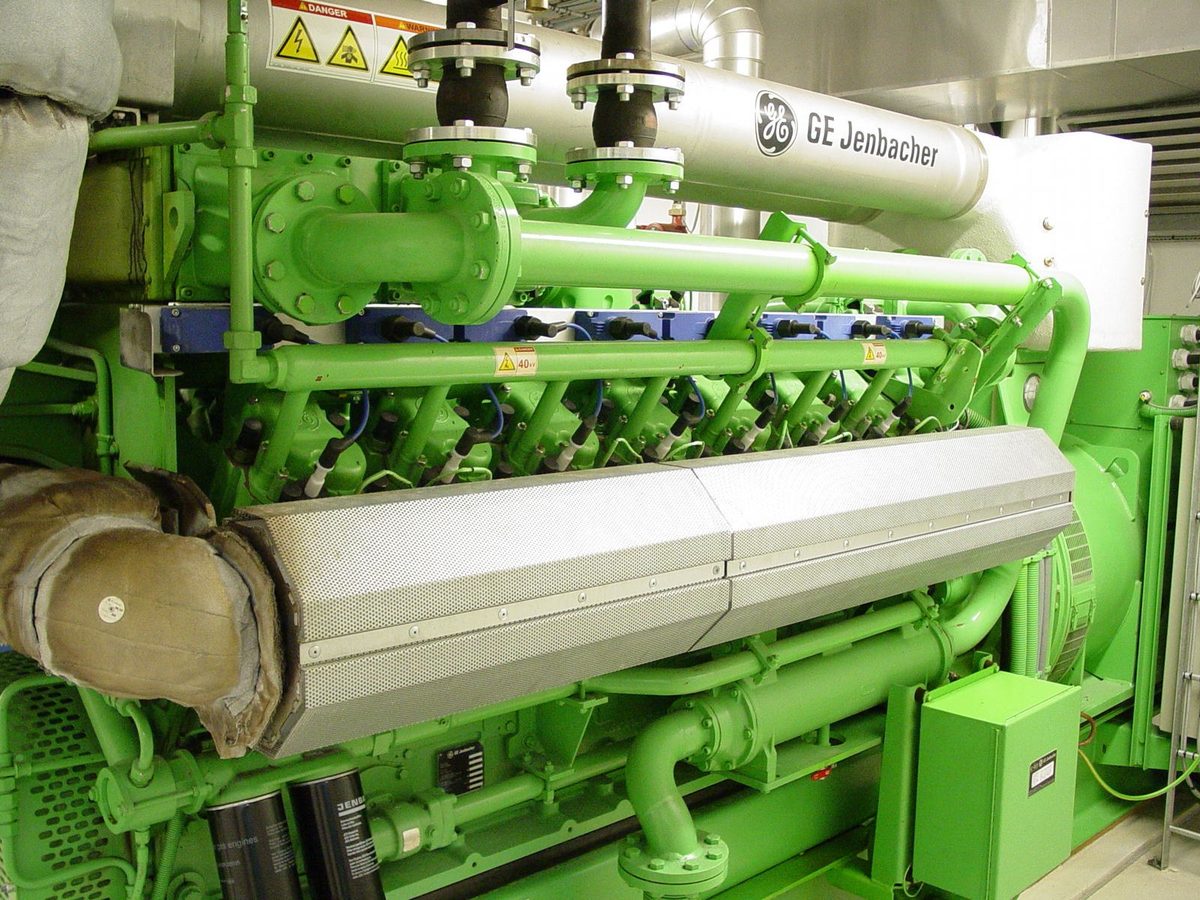
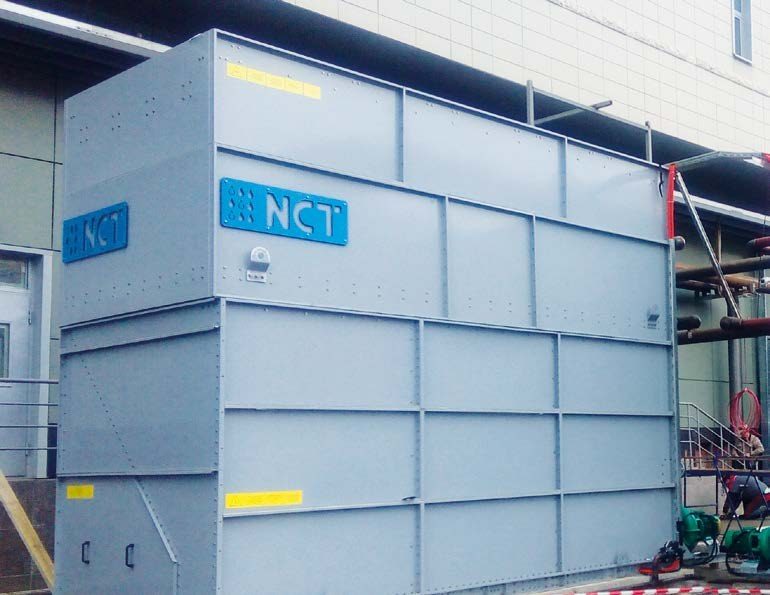
If you have a similar task, order a feasibility study or estimate the figures in the calculator. Related pages: food production and NCT dry coolers. How the chillers work is described on the Thermax absorption chillers page, and other examples are collected in the "Our sites" section, along with many others.
Other projects
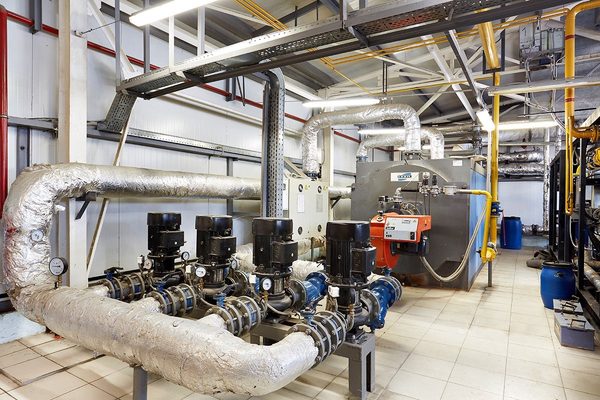
Tyumen, a 15-story Class A business center: a Thermax absorption chiller on hot water from gas engine waste heat, 12/7 °C…
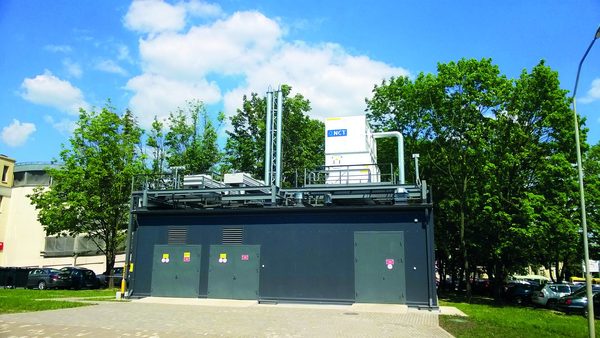
Minsk, class B1 business center: a 500 kW Thermax LT 18C absorption chiller on heat from two Bosch gas engines, NCT cooling…
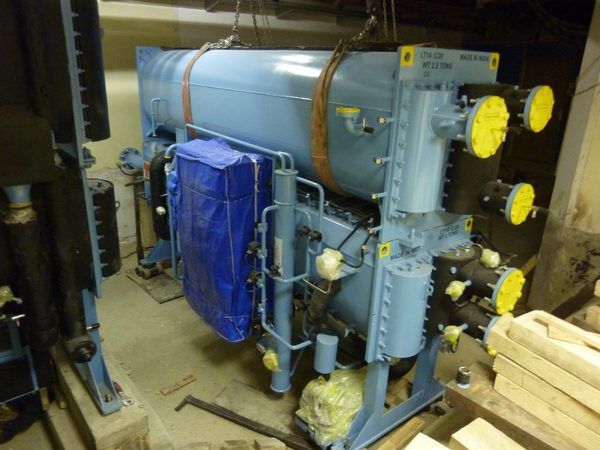
Moscow, a historic building: 5 Capstone C200 microturbines and 2 Thermax LT-14 C chillers of 500 kW, assembled from parts in the…
What our customers say
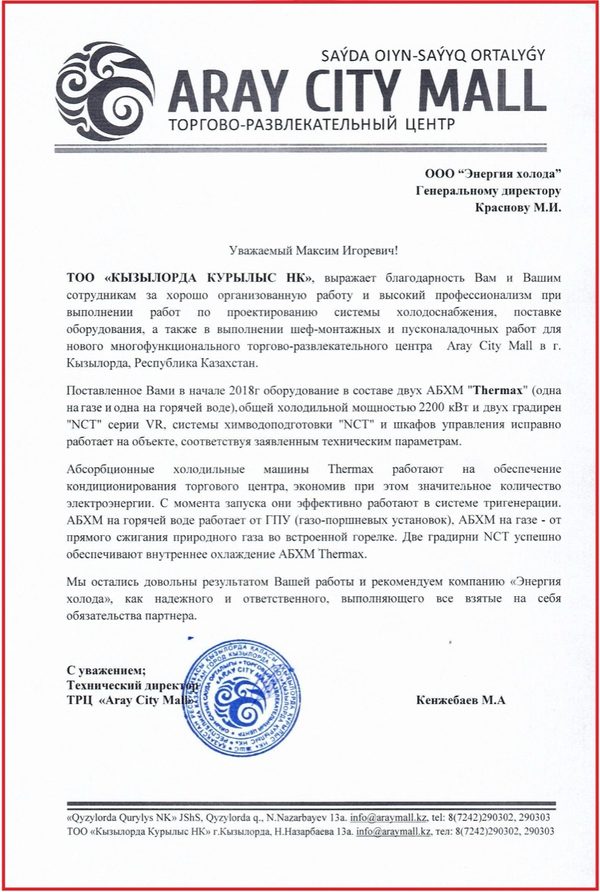
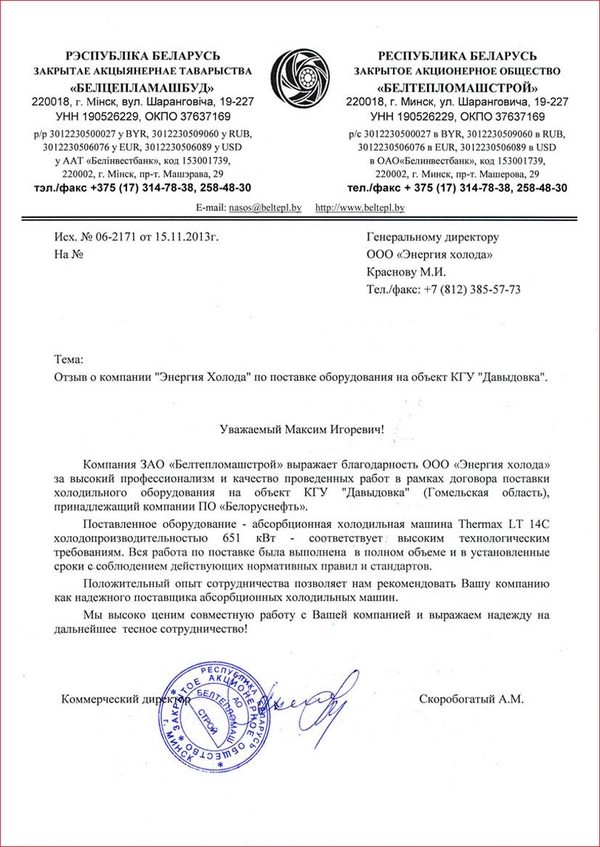
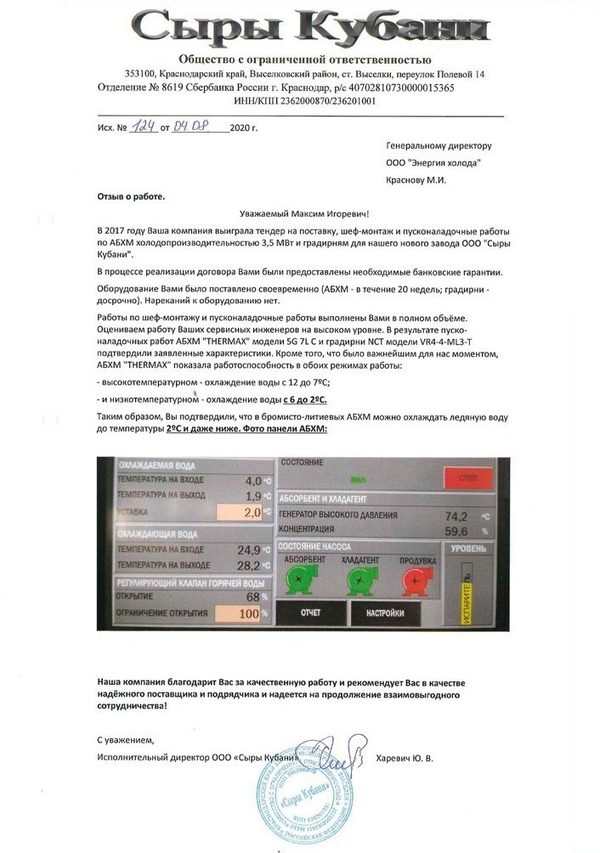
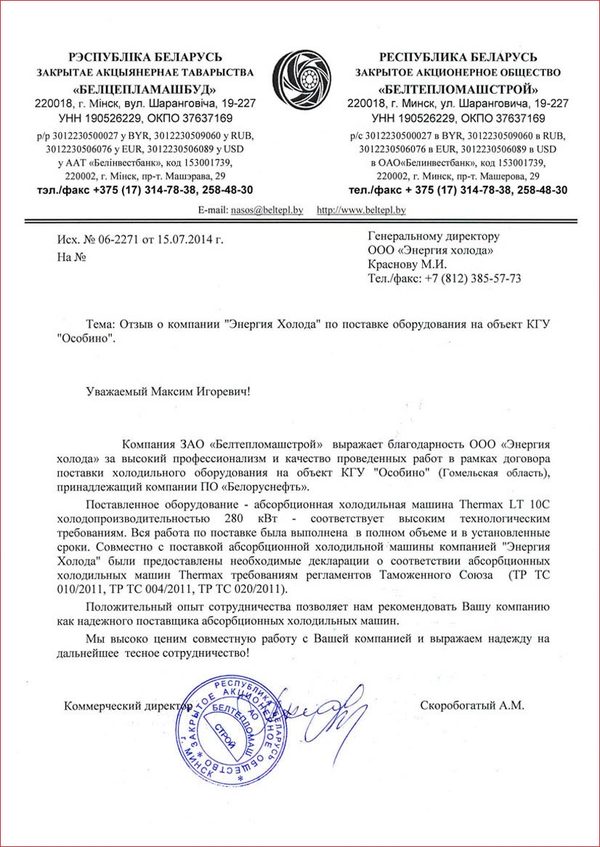
150 letters of thanks · 350+ major projects · 1,000+ customers · in business since 2011. These are real letters from customers; many others are on the references page.
Let us calculate trigeneration for your site
An engineer will put together the scheme and select the equipment, and you get a feasibility study. Free of charge, no obligation.