

Davydovka and Osobino Cogeneration Units: Two Thermax Absorption Chillers in Belarus
In brief. At two gas plants in Belarus, Thermax LT 14C (651 kW) and LT 10C (280 kW) absorption chillers make cooling from gas engine waste heat. Contractor letters confirm on-time delivery.
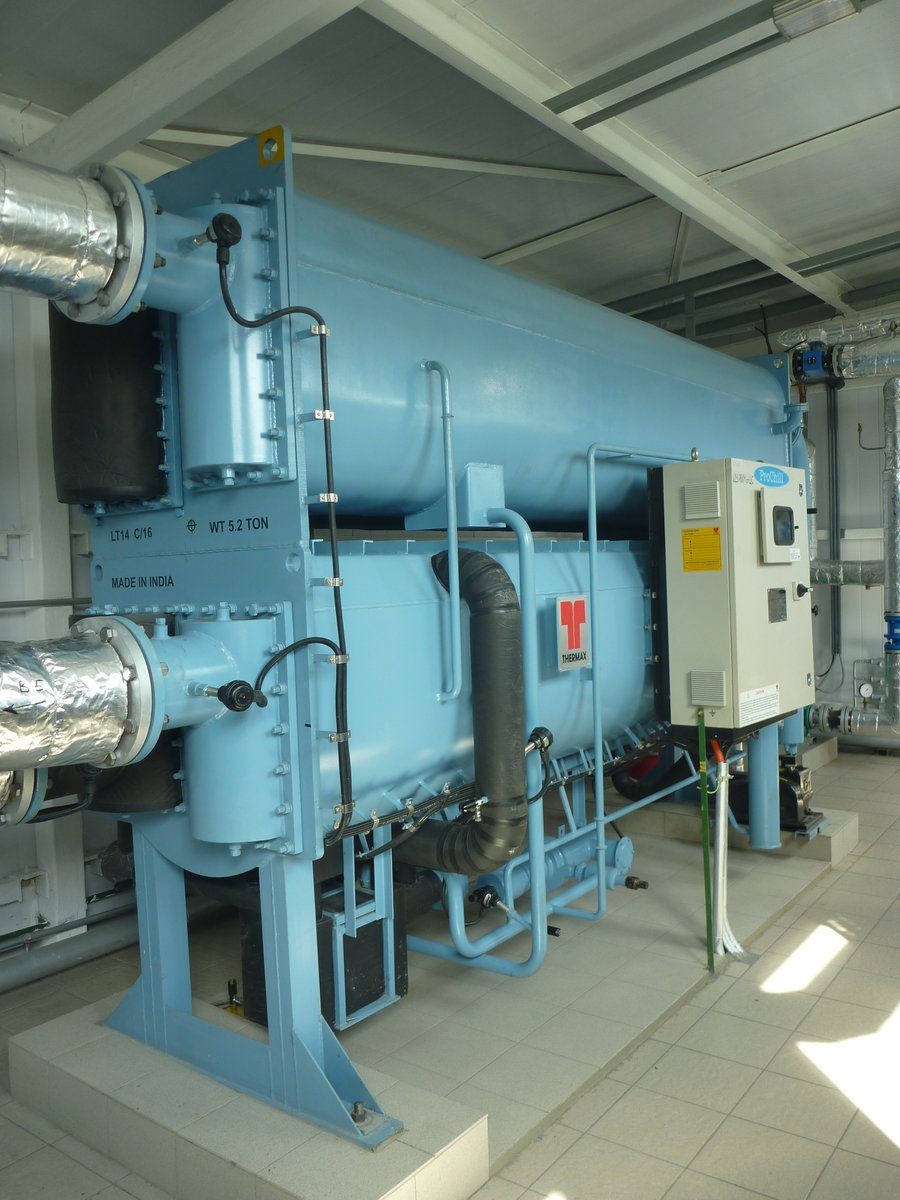
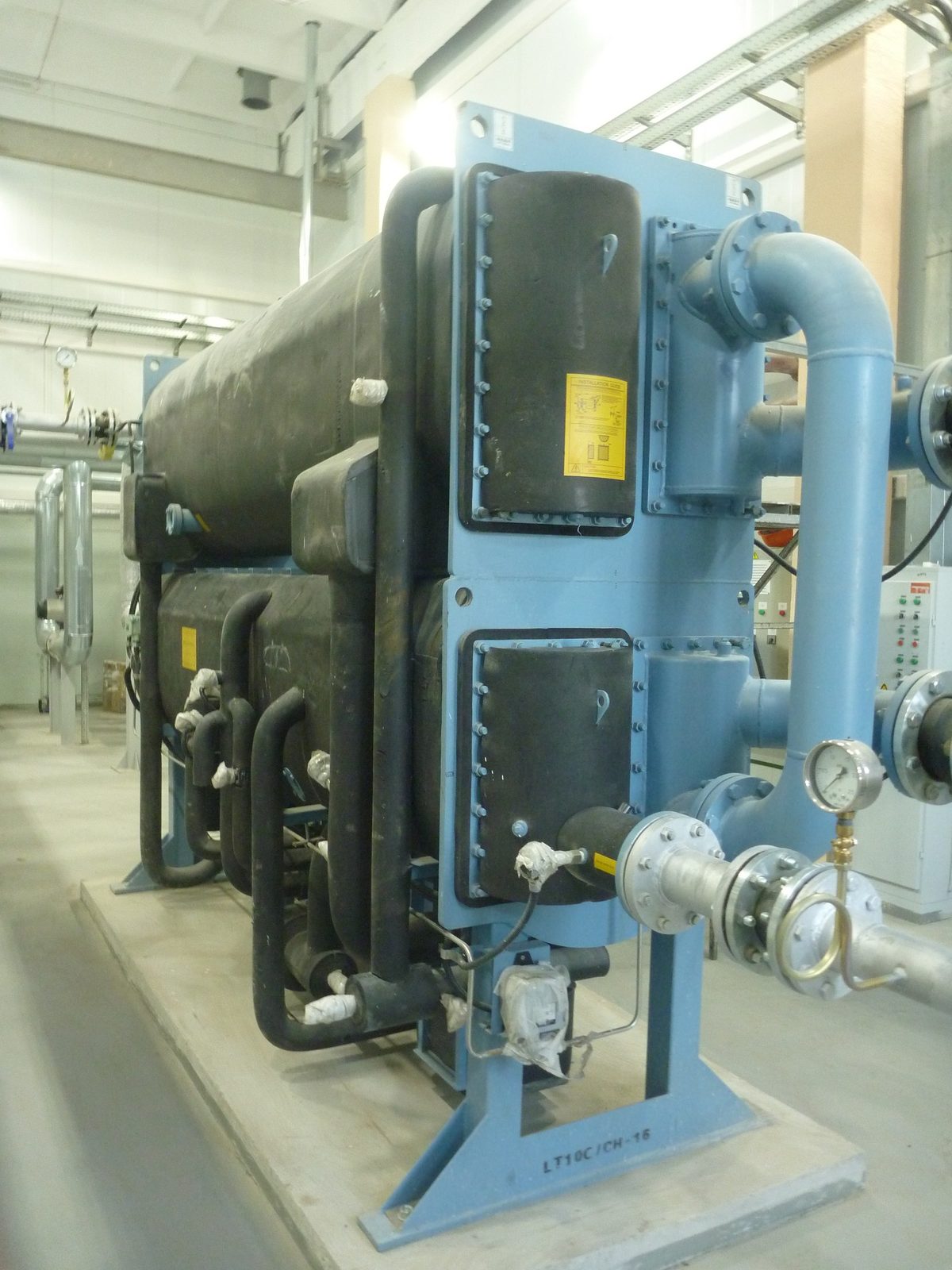
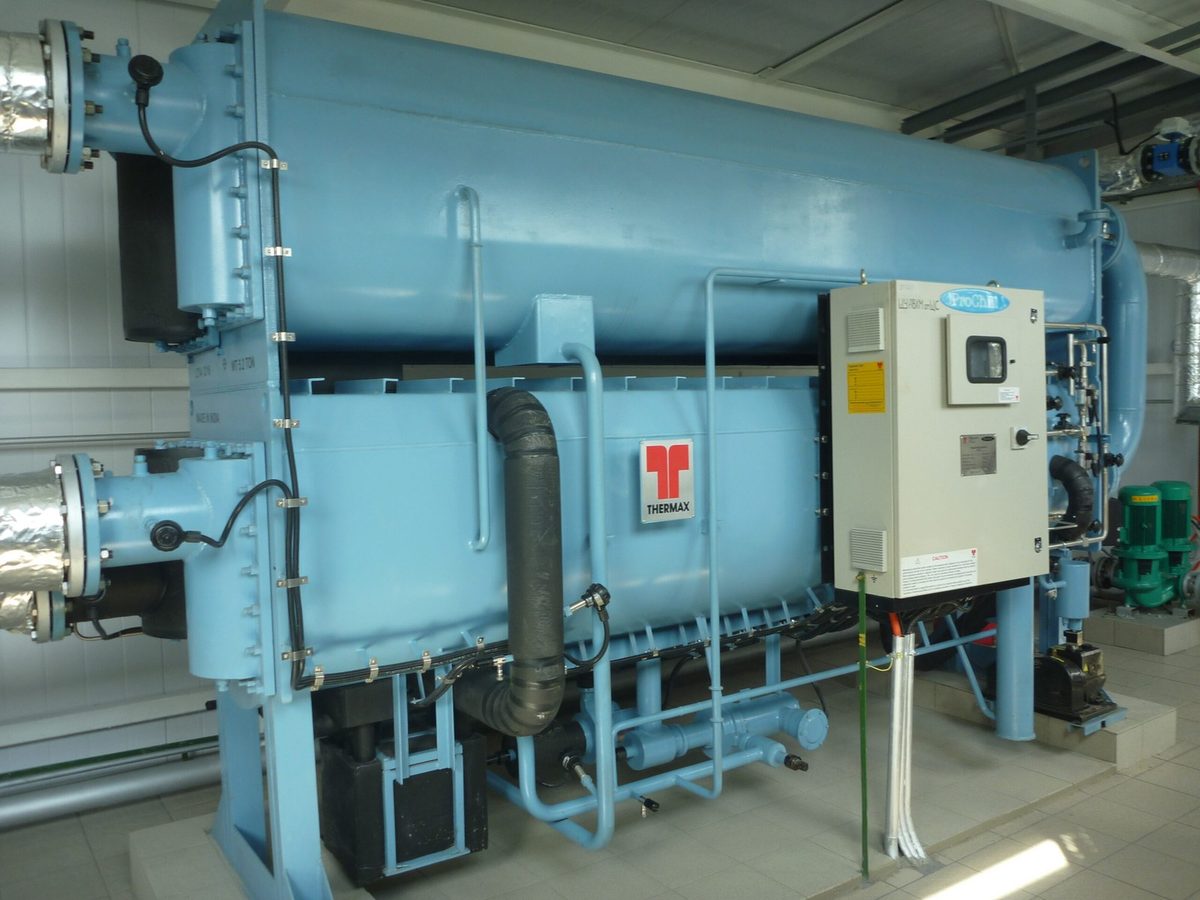
At two gas-fired cogeneration (CHP) units in Gomel Region, Davydovka and Osobino, Thermax lithium bromide absorption chillers are in operation: an LT 14C of 651 kW and an LT 10C of 280 kW. Both run on hot water from the waste heat of gas engine generator sets. We supplied the machines, carried out installation supervision and commissioning, and trained the staff.
| Parameter | Data |
|---|---|
| Sector | Fuel and energy, gas-fired cogeneration units |
| City | Gomel Region, Belarus |
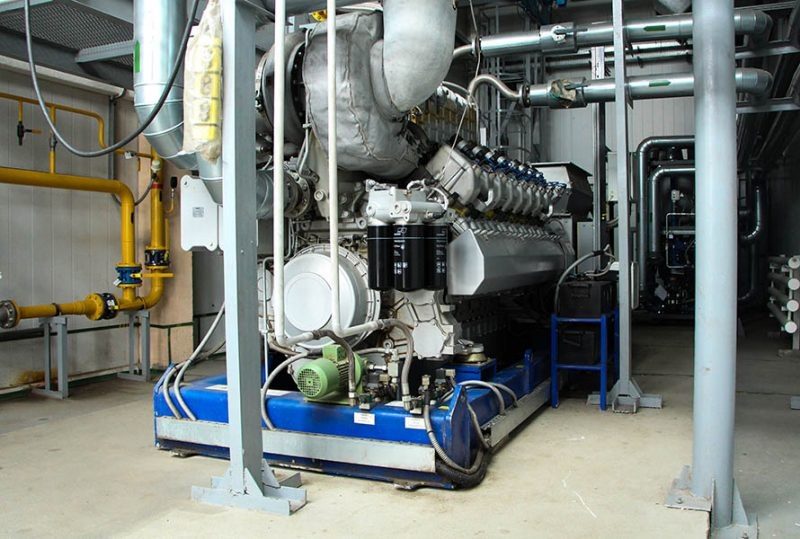
| Generation | Davydovka: gas engine, 1.26 MWe. Osobino: 2 natural gas engines, 3.1 MWe |
| Heat | Gas engine waste heat, hot water |
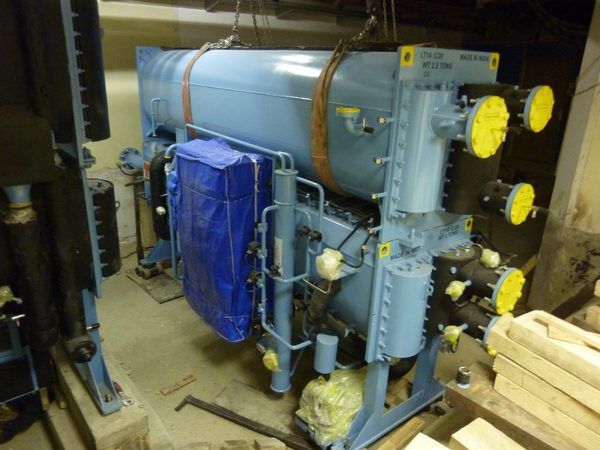
| Absorption chiller | Davydovka: Thermax LT 14C, 651 kW. Osobino: Thermax LT 10C, 280 kW. Water 12/7 °C |
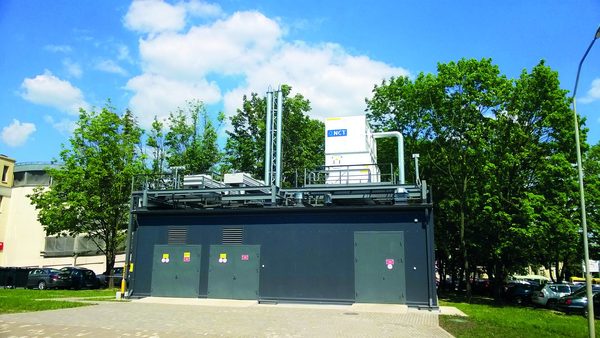
| Heat rejection | NCT open wet cooling tower with a control cabinet |
| What the cooling is for | Air conditioning |
| Our work | Supply, installation supervision, commissioning, training |
What was the task?
The engineering logic is this: at plants where gas goes into engines, part of the heat is free in summer, and it is turned into cooling for air conditioning. The capacities are small, 651 and 280 kW. At Osobino this is below the usual 300 kW threshold for an absorption chiller; such cases are calculated separately.
How does the scheme work?
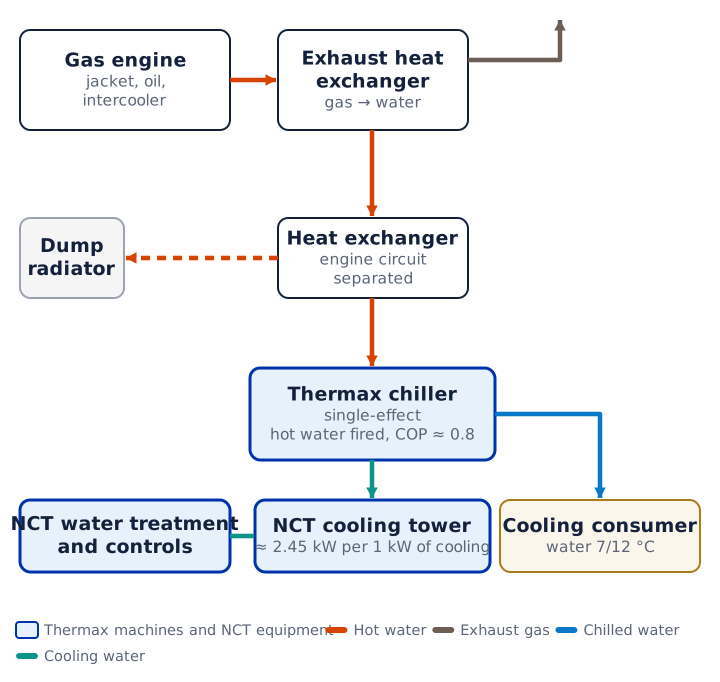
The classic: gas engine and hot-water absorption chiller
Hot water from the gas engine sets drives a single-effect machine, which supplies water at 12/7 °C. The NCT cooling tower rejects the heat.
What was the result?
Start-up took place on time under the contract. The absorption chillers were delivered to Davydovka in October 2013 and to Osobino in May 2014. Both letters are signed by the contractor, not by the oil company itself.
Site photos
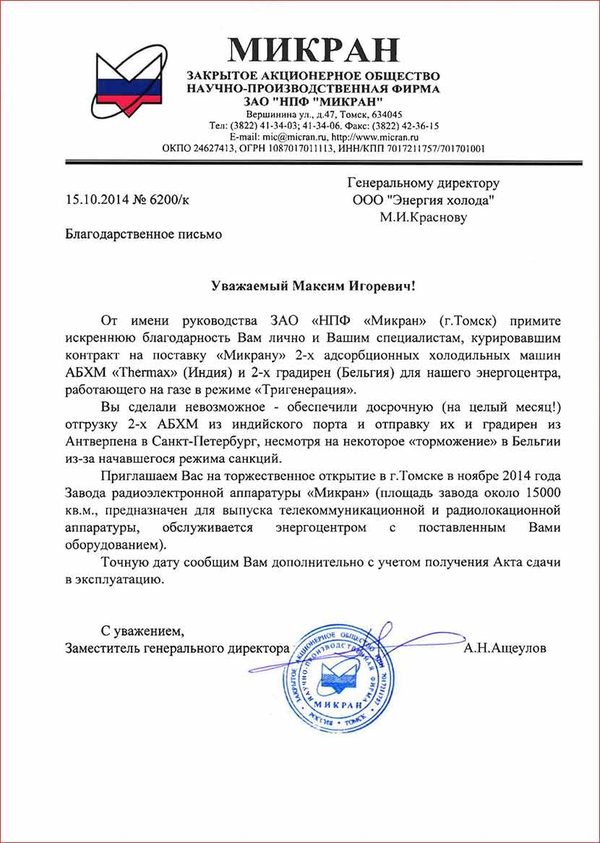
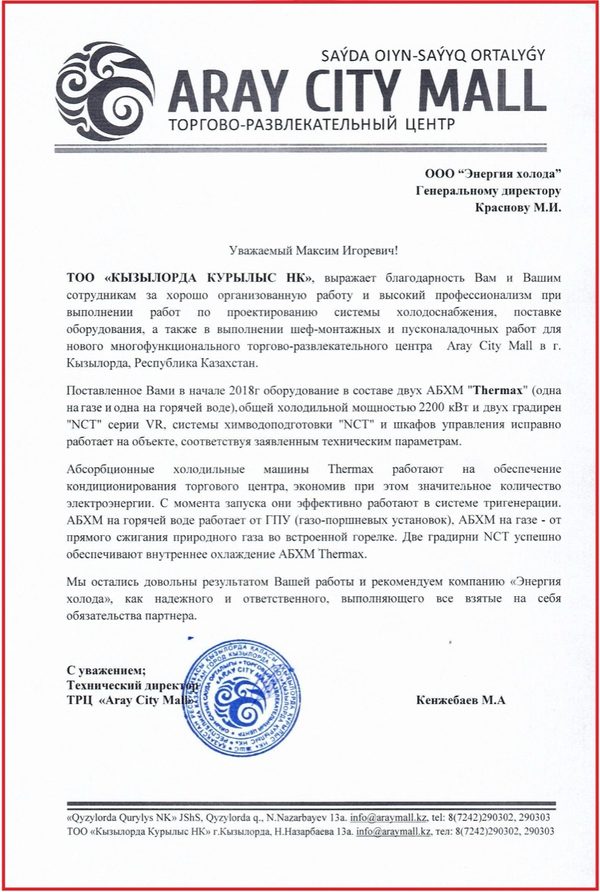
Contractor letters
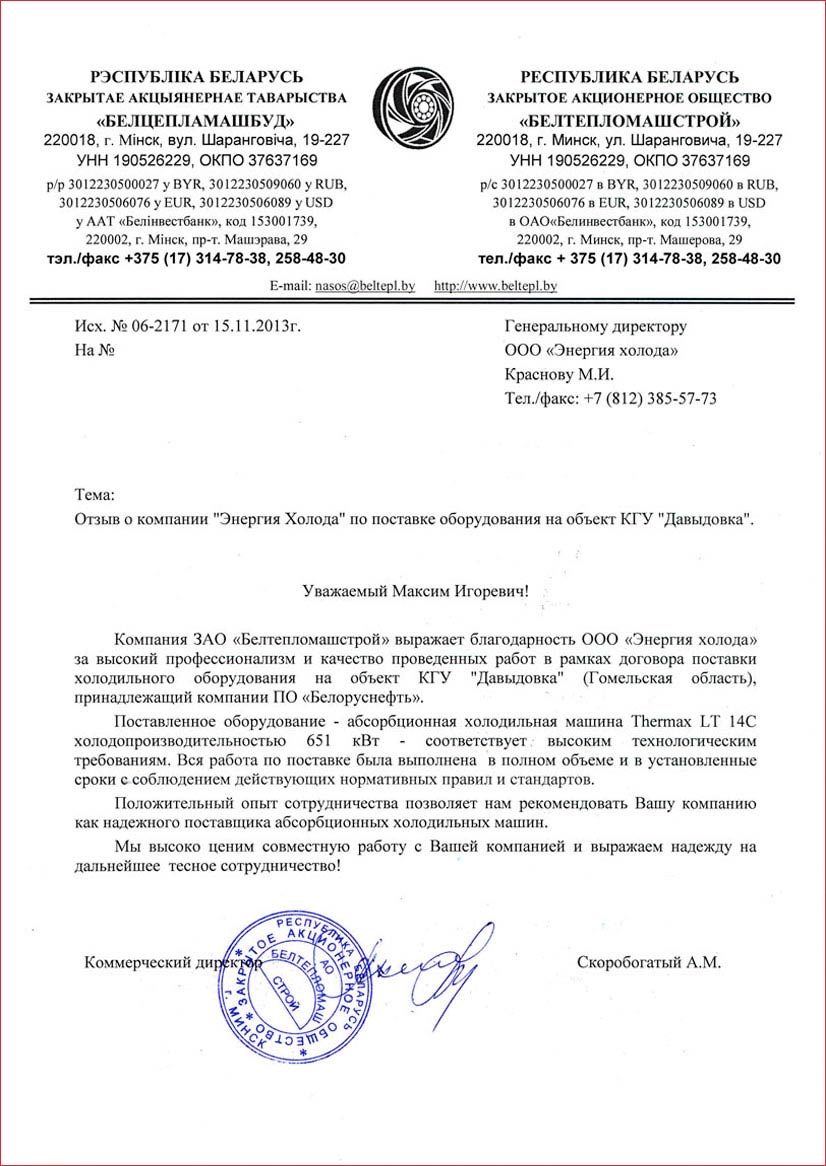
Letter of 15 November 2013, ref. No. 06-2171: the 651 kW Thermax LT 14C absorption chiller was delivered in full and on time, and the company is recommended.
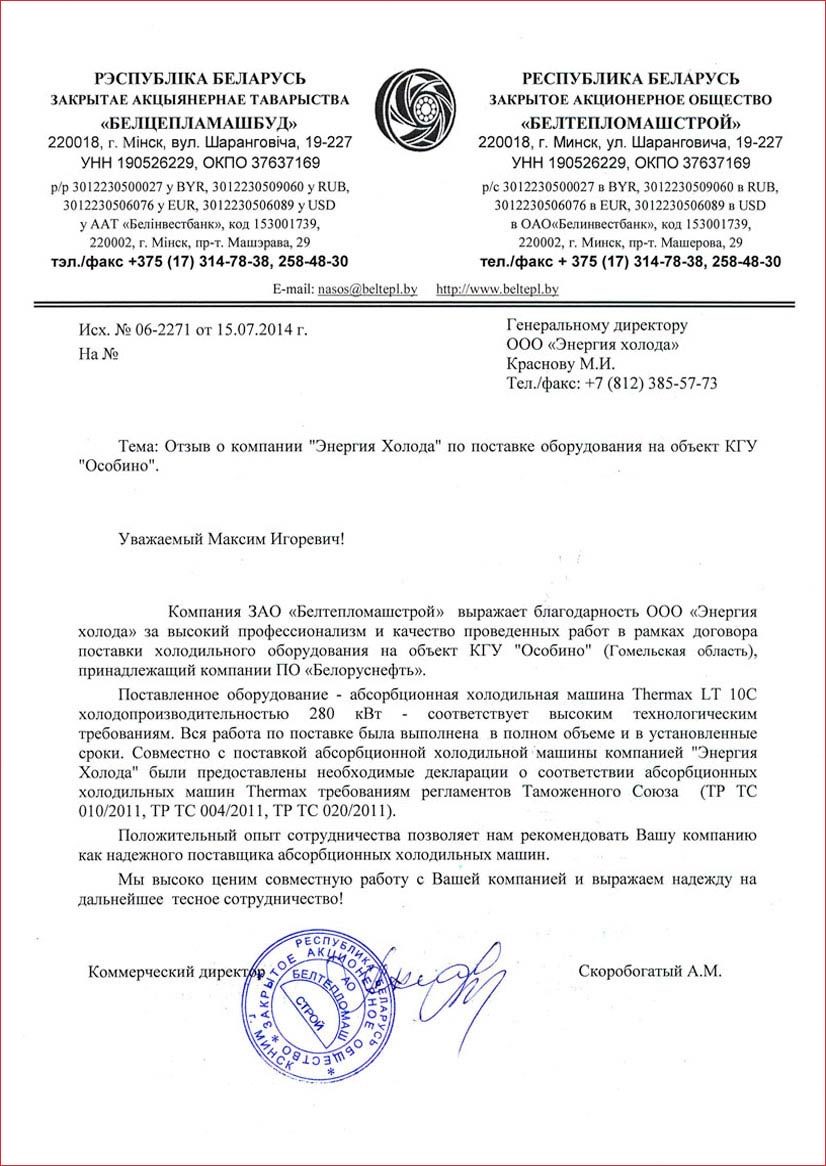
Letter of 15 July 2014, ref. No. 06-2271: delivery of the 280 kW Thermax LT 10C absorption chiller was completed in full and on time, and EAEU technical regulation (TR TS) declarations were supplied.
If you have a similar task, order a feasibility study or rough out the figures in the calculator. Related page: gas engines. How the machines work is described on the Thermax absorption chiller page; other examples are collected in the "Our sites" section, and there are many others.
Other projects
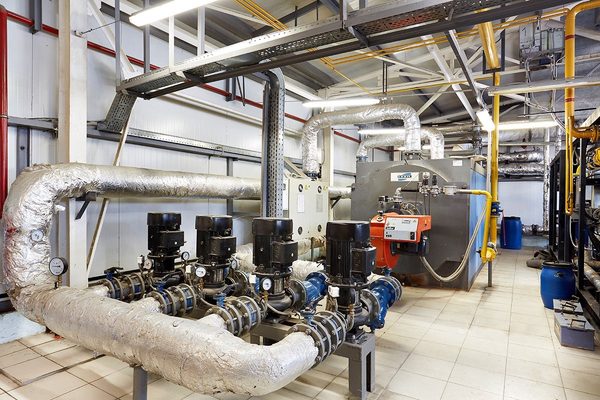
Tyumen, a 15-story Class A business center: a Thermax absorption chiller on hot water from gas engine waste heat, 12/7 °C…
Minsk, class B1 business center: a 500 kW Thermax LT 18C absorption chiller on heat from two Bosch gas engines, NCT cooling…
Moscow, a historic building: 5 Capstone C200 microturbines and 2 Thermax LT-14 C chillers of 500 kW, assembled from parts in the…
What our customers say
150 letters of thanks · 350+ major projects · 1,000+ customers · in business since 2011. These are real letters from customers; many others are on the references page.
Let us calculate trigeneration for your site
An engineer will put together the scheme and select the equipment, and you get a feasibility study. Free of charge, no obligation.