

Infosys, Tamil Nadu, India
In brief. A heat recovery unit heats water to 175 °C from the diesel exhaust, and a Thermax chiller turns it into about 1,380 kW of cooling for air conditioning.
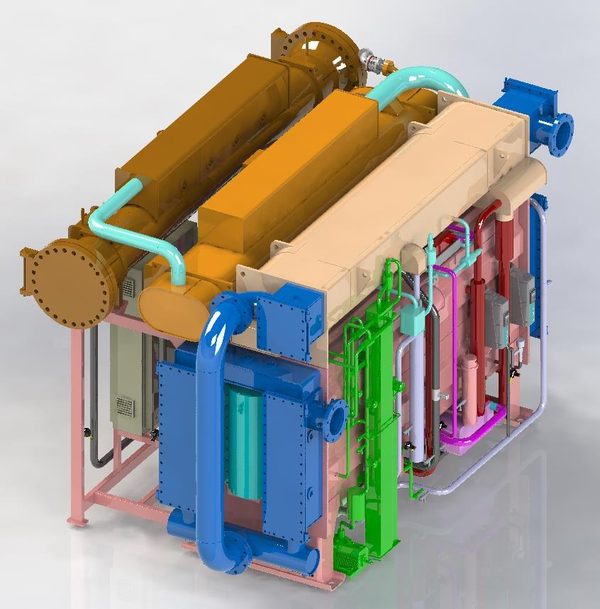
At an Infosys IT campus, three 1.6 MW diesel engines send their exhaust heat to a heat recovery unit. Hot water at 175 °C drives one Thermax absorption chiller, which produces 12 / 7 °C water for air conditioning. The savings are 2.3 million kWh per year.
What does the project consist of?
| Parameter | Value |
|---|---|
| Industry | IT campus |
| Engines | 3 diesel engines, 1.6 MW each |
| Fuel | Diesel fuel |
| Heat for the chiller | Hot water 175 / 155 °C from the exhaust heat recovery unit |
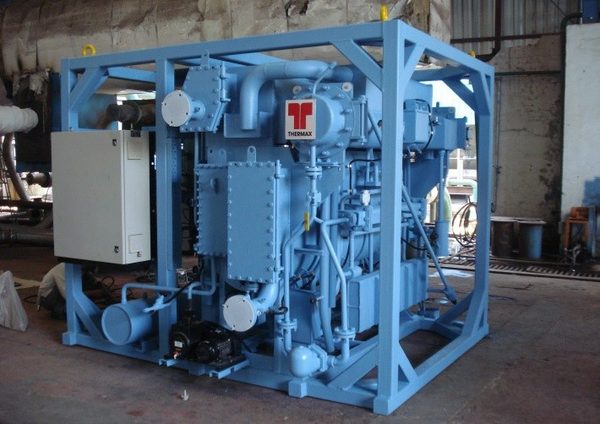
| Chiller and cooling | 1 hot water chiller, about 1,380 kW (395 TR) |
| What the cooling is for | Air conditioning, water 12 / 7 °C |
Why is this example useful for a Russian site?
Water at 175/155 °C is heated above 115 °C, so in Russia such a circuit falls under the rules for pressure equipment (FNP ORPD, the Federal Industrial Safety Rules for pressure equipment): that means a separate design and regulatory supervision. Here heat is taken only from the exhaust; the diesel jacket water needs its own consumer or heat rejection. More: trigeneration at diesel power plants.
How does this kind of scheme work?
Water is heated by the diesel exhaust in the heat recovery unit and drives the chiller.
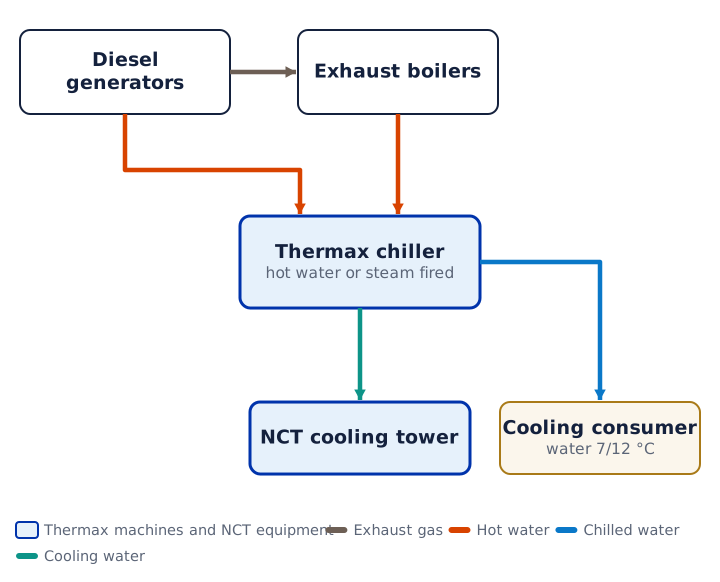
Based on Thermax materials
Other projects worldwide
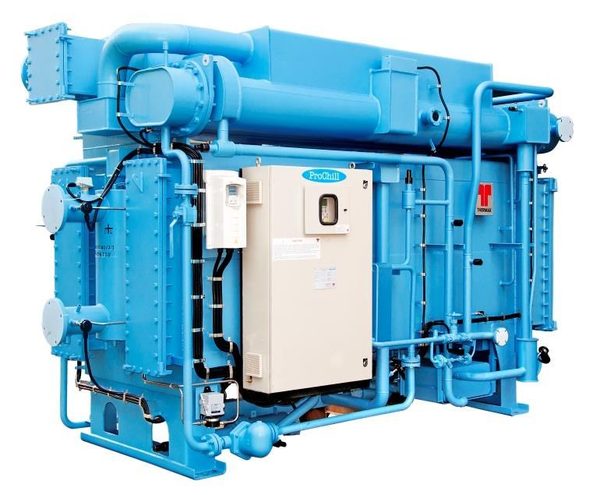
AT&S in Shanghai: one 1.1 MW engine and one Thermax absorption chiller give 1,160 kW of cooling in summer and 80 °C hot water in…
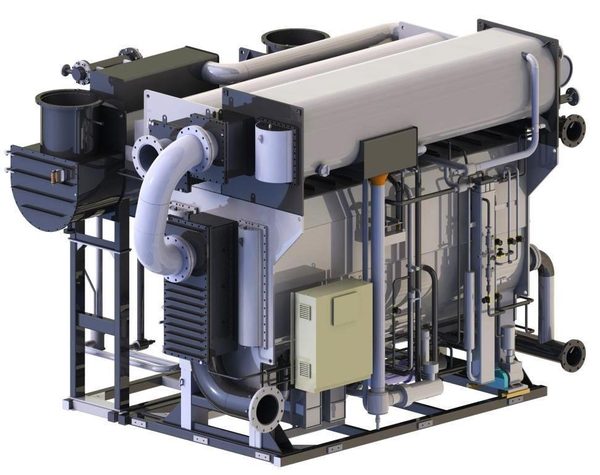
Berlin Airport: two Thermax chillers on engine exhaust give 2,600 kW of air conditioning cooling. A trigeneration case with…
Brevoort East residential building in New York: two Tecogen engines and a 280 kW Thermax machine that kept running through…
What our customers say
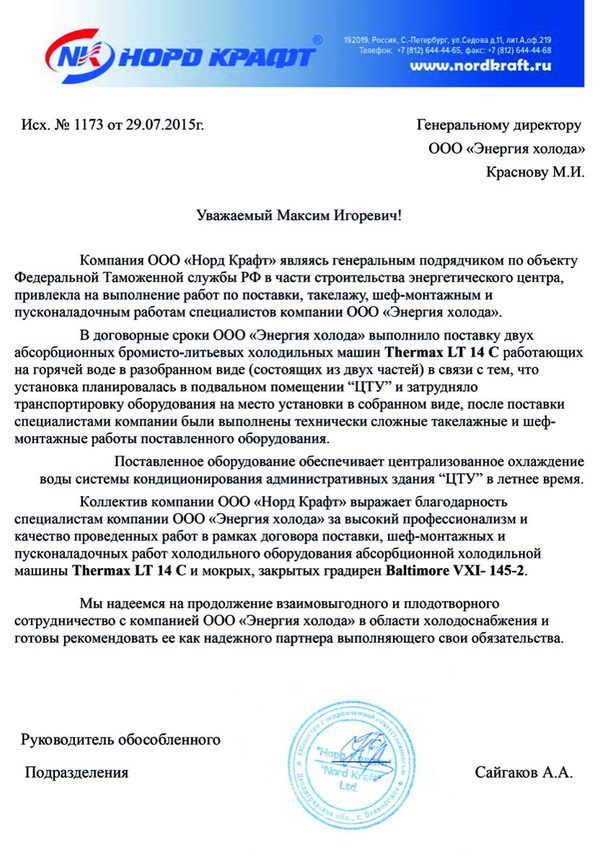
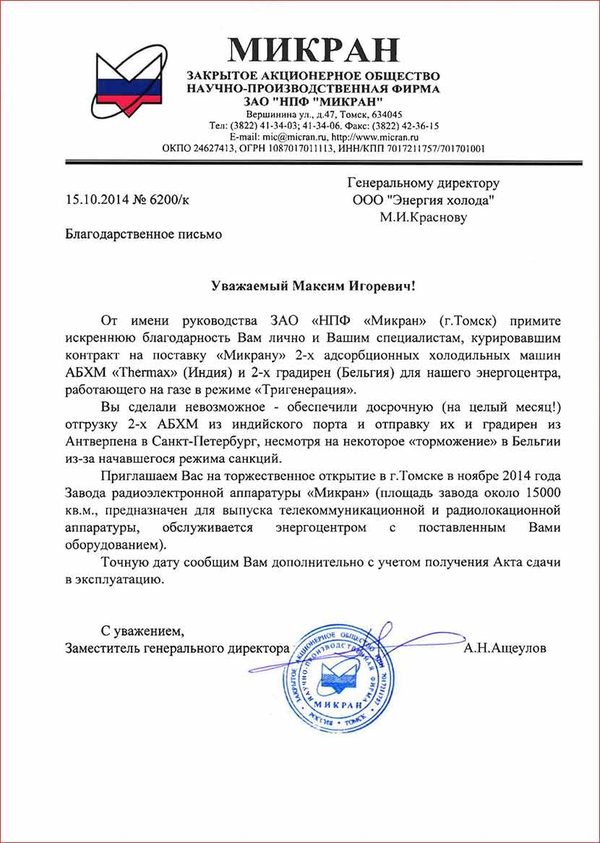
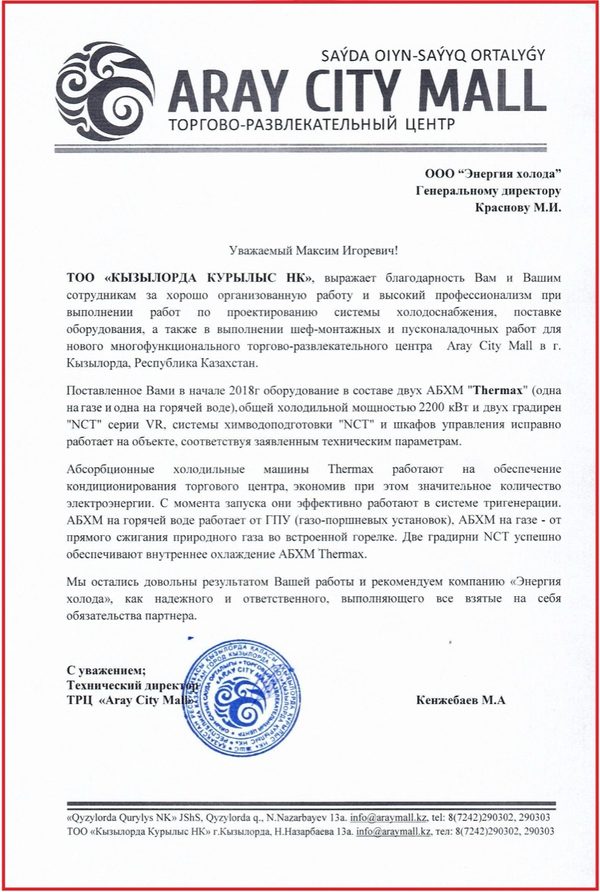
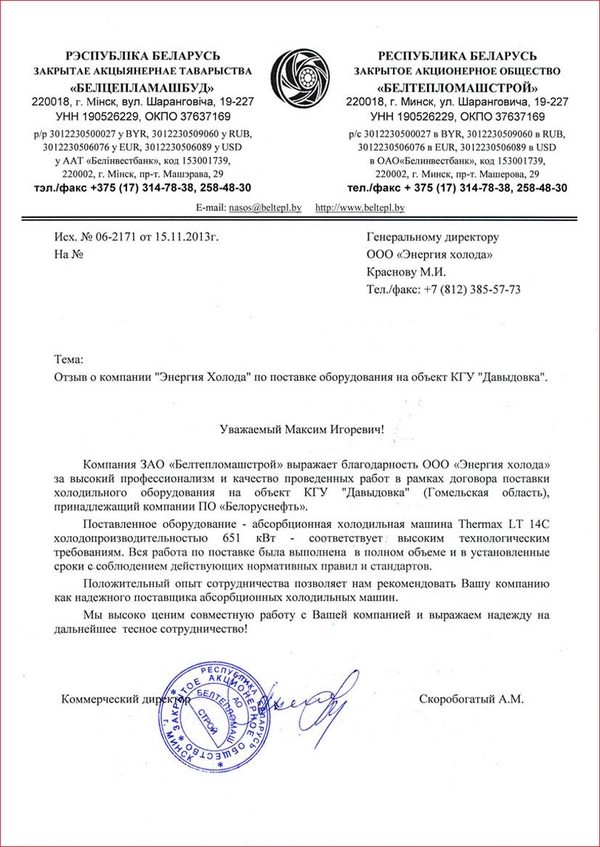
150 letters of thanks · 350+ major projects · 1,000+ customers · in business since 2011. These are real letters from customers; many others are on the references page.
Let us calculate trigeneration for your site
An engineer will put together the scheme and select the equipment, and you get a feasibility study. Free of charge, no obligation.