

Berlin Airport, Germany
In brief. Exhaust from Caterpillar gas engines, cooled from 465 to 195 °C, drives two Thermax chillers that together give the airport 2,600 kW of cooling.
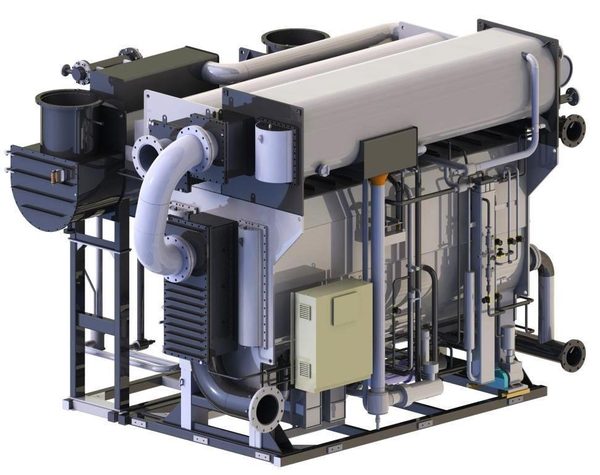
At Berlin Airport, Caterpillar gas engines generate electricity, and the heat in their exhaust goes to air conditioning. Two Thermax absorption chillers on the exhaust deliver 2,600 kW of cooling. The source names the benefit as lower electricity demand and lower greenhouse gas emissions, but gives no figures.
What does the project consist of?
| Parameter | Value |
|---|---|
| Industry | Airport |
| Engines | Caterpillar, 2 MW engine output |
| Fuel | Natural gas |
| Heat for the chiller | Exhaust at 465 °C, cooled to 195 °C |
| Chillers and cooling | 2 exhaust-fired chillers of 1,300 kW (370 TR) each, 2,600 kW (740 TR) in total |
| What the cooling is for | Airport air conditioning |
Why is this example useful for a Russian site?
The chiller takes the exhaust from 465 down to 195 °C but does not use the engine jacket water. That means the jacket heat has to be used separately or rejected, otherwise the engine will overheat. The chiller's gas-side pressure drop, 200–250 mm H2O, is calculated right away, together with the exhaust duct. More: trigeneration (CCHP) with gas engines.
How does this kind of scheme work?
Engine exhaust goes straight into an exhaust-fired absorption chiller, which supplies chilled water to the consumer.
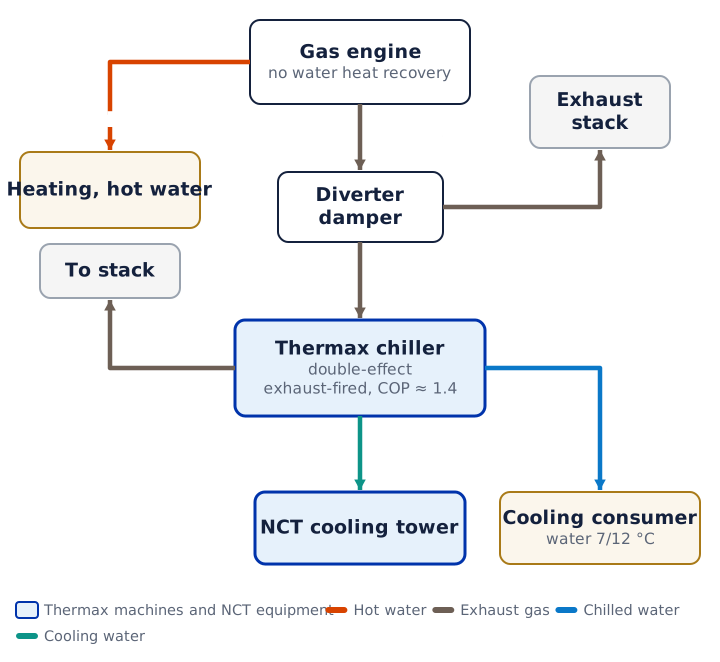
Based on Thermax materials
Other projects worldwide
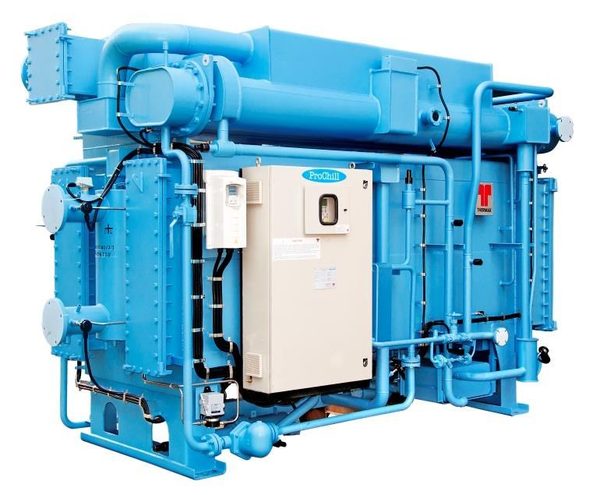
AT&S in Shanghai: one 1.1 MW engine and one Thermax absorption chiller give 1,160 kW of cooling in summer and 80 °C hot water in…
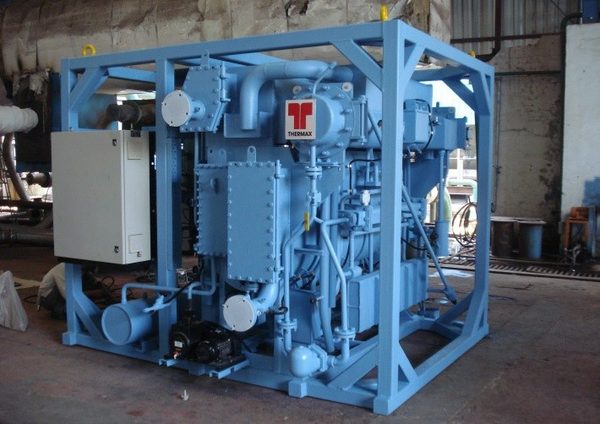
Brevoort East residential building in New York: two Tecogen engines and a 280 kW Thermax machine that kept running through…
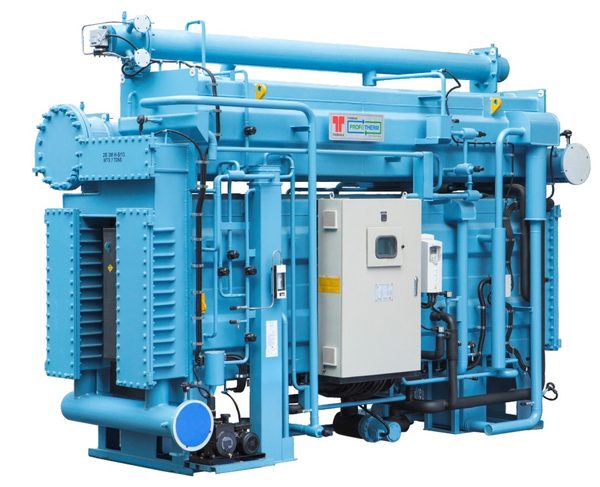
Cadbury plant in Lagos: one 3.7 MW engine and a gas-fired Thermax chiller give 2,317 kW of cooling at 6 °C. A trigeneration case…
What our customers say
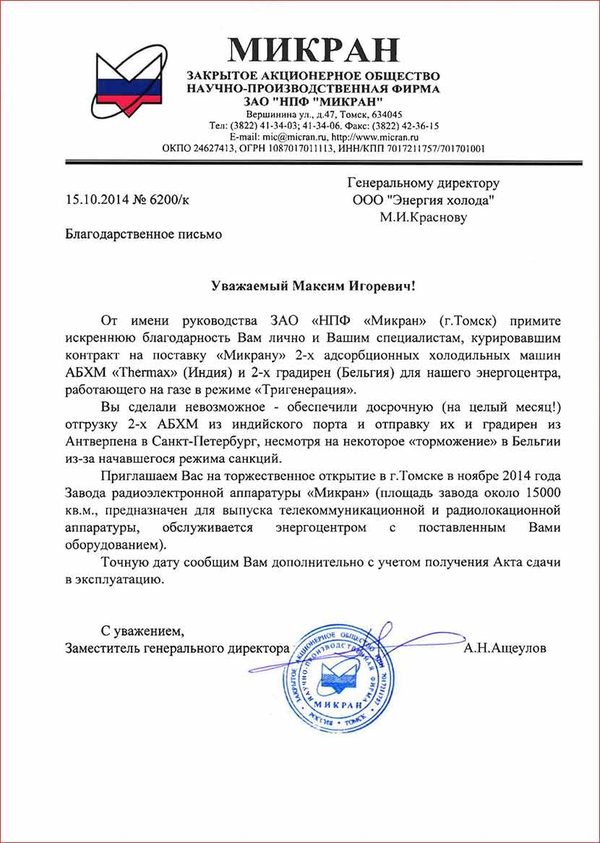
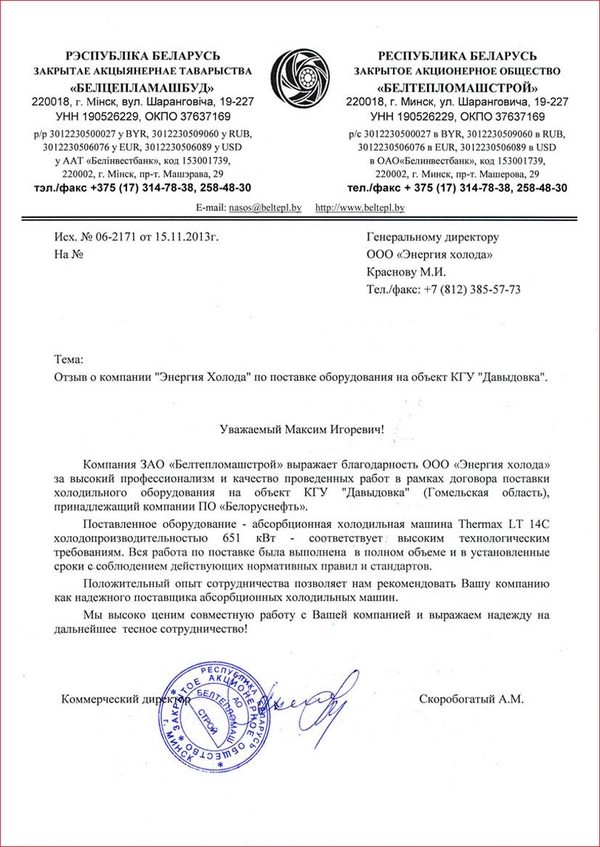
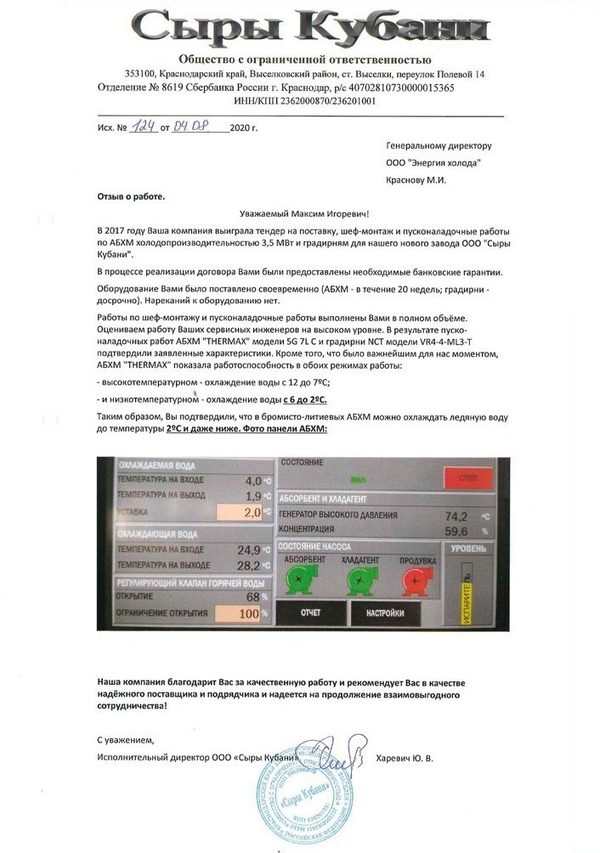
150 letters of thanks · 350+ major projects · 1,000+ customers · in business since 2011. These are real letters from customers; many others are on the references page.

Let us calculate trigeneration for your site
An engineer will put together the scheme and select the equipment, and you get a feasibility study. Free of charge, no obligation.