

CES Energy, Business Park in Jeddah, Saudi Arabia
In brief. Heat from eight 2 MW diesel engines drives three Thermax machines, which together give the park about 7,400 kW of cooling.
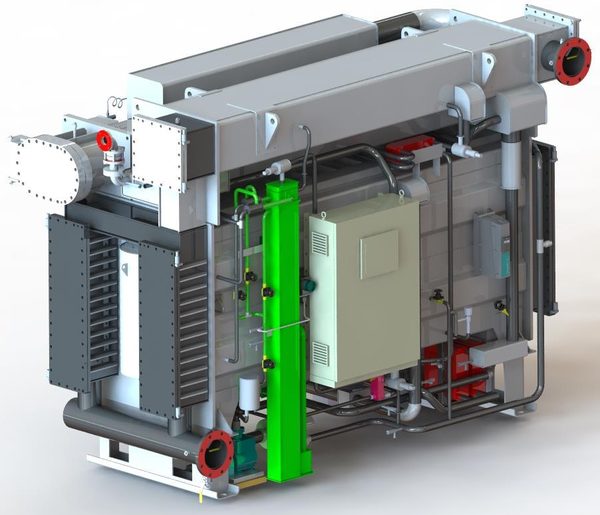
A business park in Jeddah gets its electricity from eight 2 MW diesel engines. Jacket and exhaust heat is turned into hot water, which drives three Thermax absorption machines. The savings on chillers came to 5.1 million kWh per year.
What does the project consist of?
| Parameter | Value |
|---|---|
| Sector | Commercial park, 245,000 m² |
| Engines | 8 diesel engines, 2 MW each |
| Fuel | Diesel fuel |
| Heat for the machine | Jacket and exhaust; hot water 104 / 87.8 °C |
| Machine and cooling | 3 machines of 700 TR each, about 7,400 kW (2,100 TR) in total; water 13.5 / 4.5 °C |
| What the cooling is for | Air conditioning |
Why is this example useful for a Russian site?
Water at 13.5/4.5 °C instead of the usual 12/7: a 9 K difference against 5 K, so the flow for the same cooling is almost halved, and pipes and pumps get smaller. For a Russian diesel plant, the first thing to check is the operating hours: a standby diesel that rarely runs does not reach the 3,000–4,000 hours per year threshold. More: trigeneration at diesel power plants.
How does this kind of scheme work?
Jacket and exhaust heat from the diesels heats water to 104/87.8 °C, and that water drives the machines.
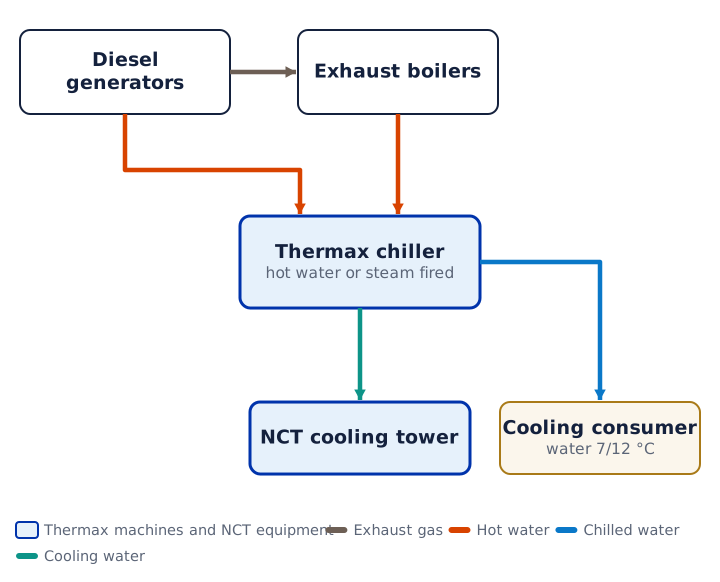
Based on Thermax materials
Other projects worldwide
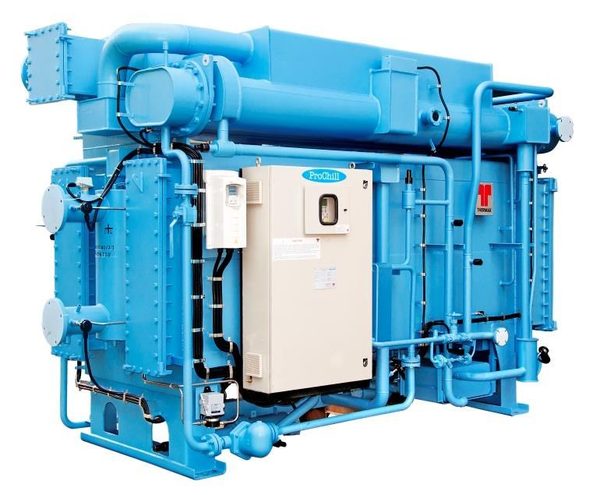
AT&S in Shanghai: one 1.1 MW engine and one Thermax absorption chiller give 1,160 kW of cooling in summer and 80 °C hot water in…
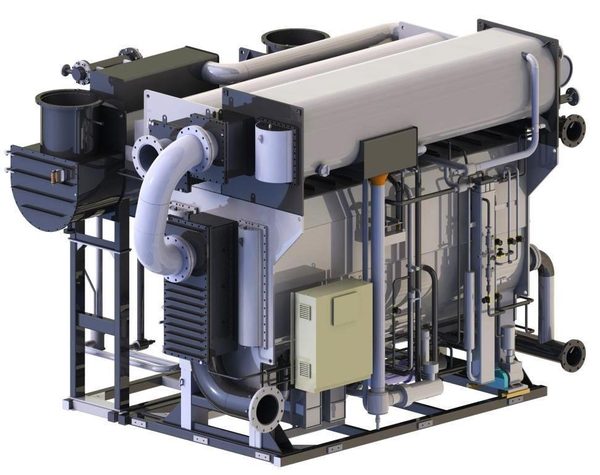
Berlin Airport: two Thermax chillers on engine exhaust give 2,600 kW of air conditioning cooling. A trigeneration case with…
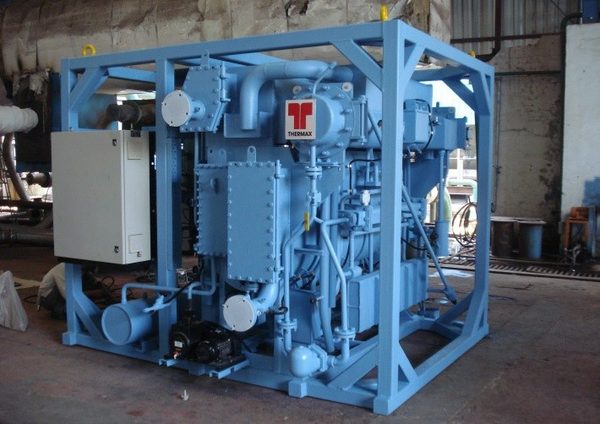
Brevoort East residential building in New York: two Tecogen engines and a 280 kW Thermax machine that kept running through…
What our customers say
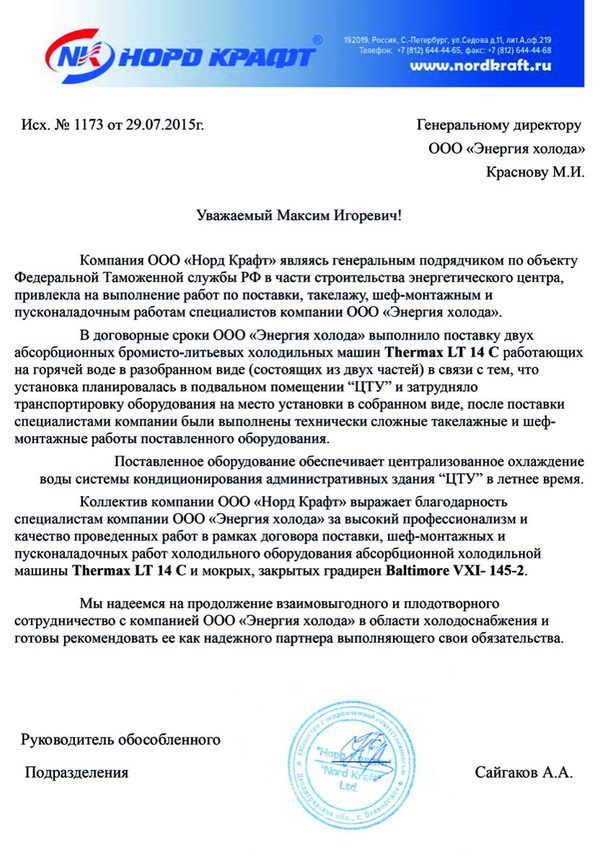
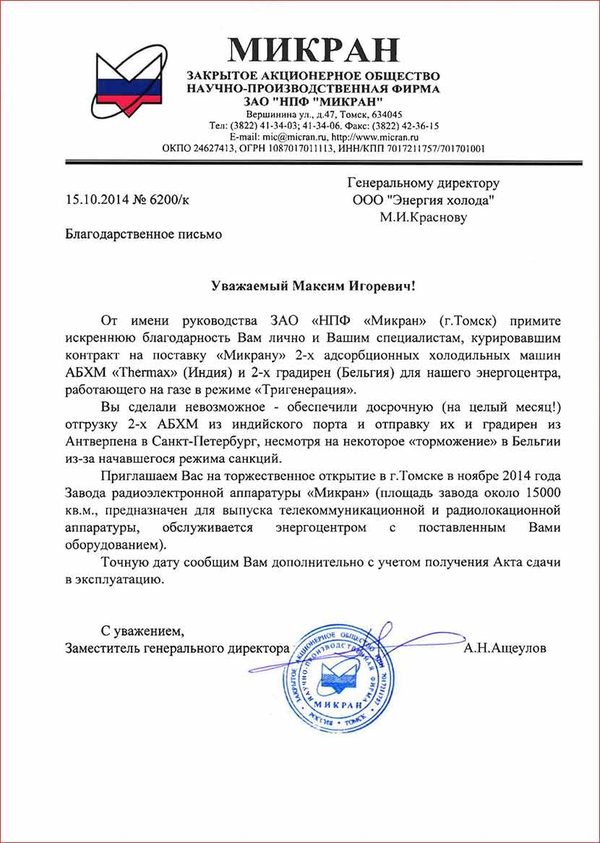
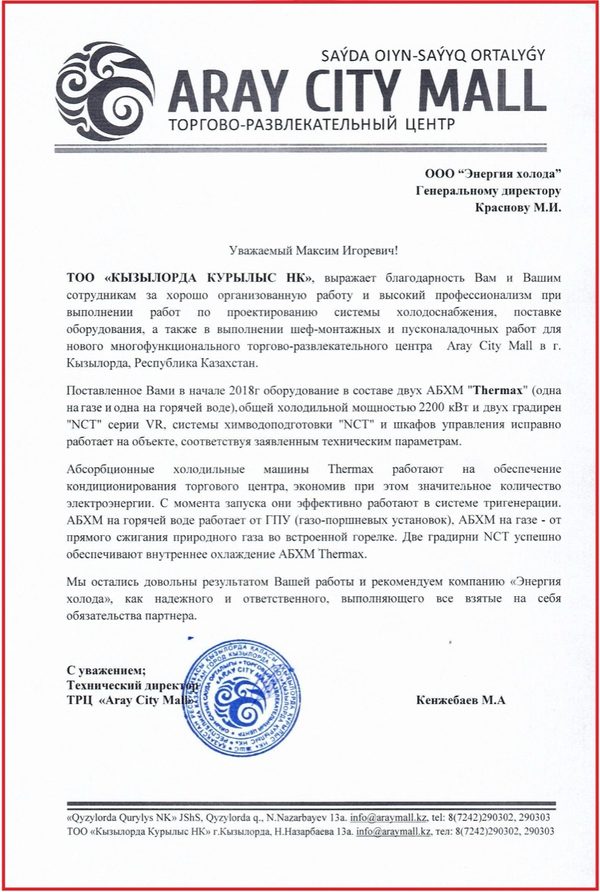
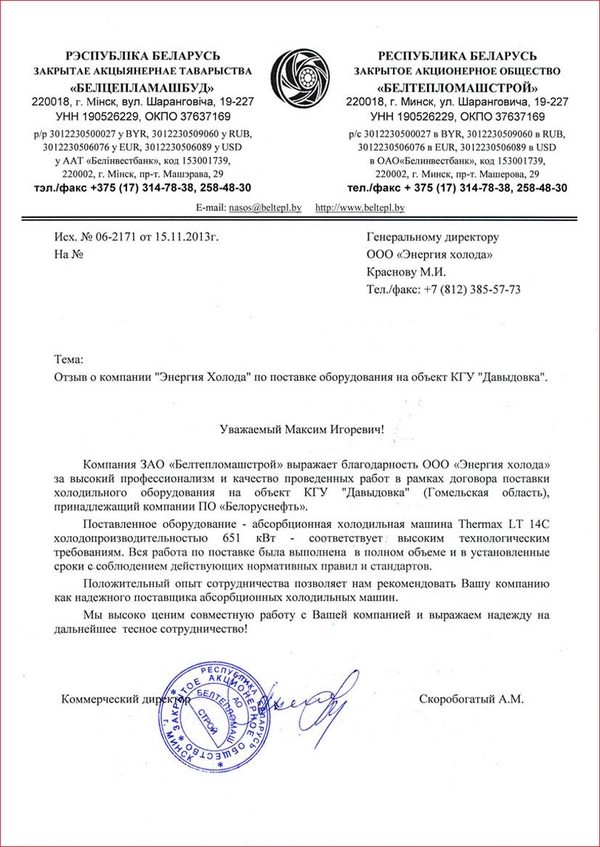
150 letters of thanks · 350+ major projects · 1,000+ customers · in business since 2011. These are real letters from customers; many others are on the references page.
Let us calculate trigeneration for your site
An engineer will put together the scheme and select the equipment, and you get a feasibility study. Free of charge, no obligation.